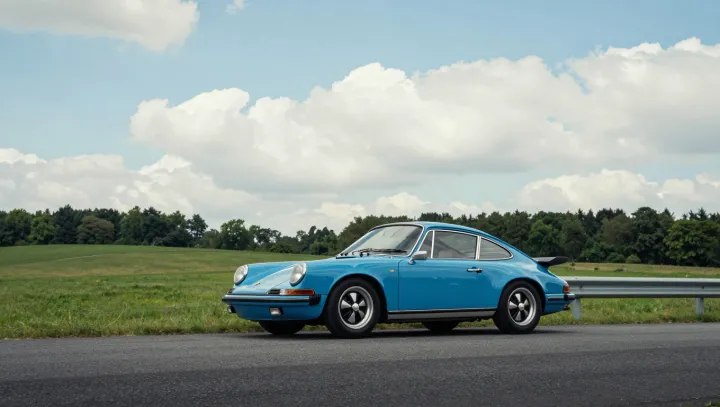
The Porsche 911 turned a handling problem into a signature. Its engine sits behind the rear axle, placing substantial weight over the driven wheels and giving them useful traction under acceleration. The arrangement has a cost. When a driver lifts off the throttle in a corner, weight shifts forward, reducing rear grip and making oversteer more likely.
Abandoning the layout would have erased more than a mechanical quirk. The rearward mass affects the car's polar moment of inertia, making rotation harder to arrest once it begins, while leaving the front wheels comparatively lightly loaded. Porsche addressed those tendencies through decades of changes to suspension geometry, tires and chassis tuning, rather than pretending the physics could be repealed. Later cars gained electronic stability control, which can brake individual wheels and reduce engine power when sensors detect a loss of control. The tradeoff remains real. Assistance can soften the consequences of a mistake, but it cannot create grip where none exists.
The shape is part of the bargain, not an ornament pasted onto it. Round headlights and a sloping roofline give the car its recognizable face and silhouette, while the rear-engine architecture helps explain the proportions that have survived through successive generations. More power and wider tires have changed the experience, as have refinements that make the car more approachable than its early predecessors. The argument survives in metal. A familiar curve still shelters an unconventional answer to the question of where an engine belongs.