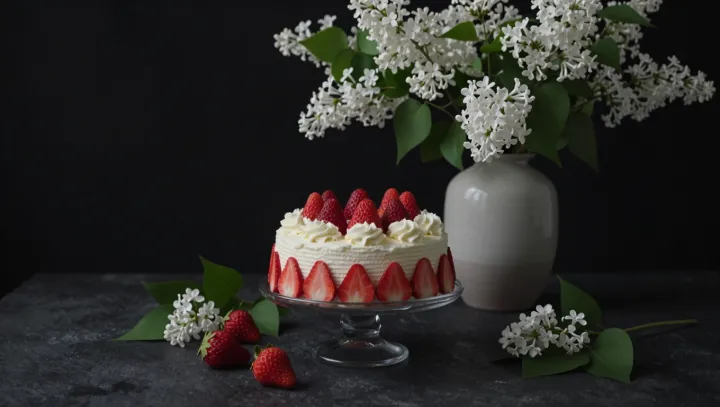
Sugar can undo a strawberry cake as readily as it sweetens one. A crown of whole berries and a ring of slices promise a neat union of fruit and cream, but the same sugar that brings juice to the surface can send it seeping into the sponge. The risk hides in plain sight.
The transformation is less mysterious than it looks. In maceration, sugar draws moisture from cut strawberries through osmosis: water moves across cell membranes toward the more concentrated solution outside. Dissolving sugar and berry juices form a syrup, while softened fruit releases still more liquid as its tissues break down. Cut berries are especially vulnerable because their exposed surfaces let juice escape. Left against a cake layer, that liquid does not remain politely within the filling. The porous crumb absorbs it, and a tender slice can become wet and heavy. Cream offers some separation, but it is no guarantee against a pool of syrup.
Restraint is the better decoration. Drain sweetened berries before placing them between layers, and spoon any collected syrup over individual slices rather than letting it settle inside the cake. A thin layer of buttercream or chocolate can provide a more resistant barrier between fruit and sponge, though gaps will still admit liquid. For the berries around the sides, pat the cut surfaces dry before arranging them; add the whole berries on top close to serving. Refrigeration helps preserve the assembled cake, but it will not stop moisture from migrating. The prettiest slice depends on a quiet bargain: enough juice for flavor, not so much that the cake disappears beneath it.