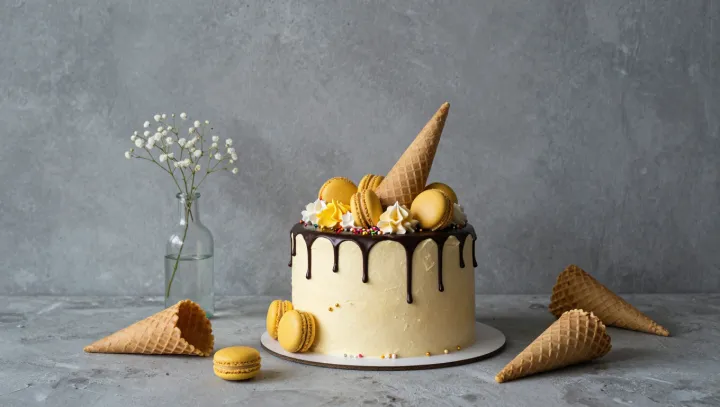
The best chocolate drip is a controlled fall, not an accident of decoration. Too warm, and the glaze races toward the base; too cool, and it can stop in a blunt lump. Between those extremes lies the finish that gives a cake crowned with yellow macarons its playful poise.
Temperature does more than set the pace. It changes viscosity, the resistance of the glaze to flow, while heat transfer between glaze and cake changes that viscosity again as the chocolate descends. A chilled, firm frosting draws heat from the glaze, helping drips slow and set sooner; a warmer cake leaves them fluid longer. The recipe matters too: a thin glaze can travel farther than a thick one at the same temperature, so no single thermometer reading guarantees a neat edge.
A test drip is more useful than a guess. Spoon a little glaze over the edge of the chilled cake and watch where it stops before committing to the rest. If it reaches the bottom too quickly, let the glaze cool slightly; if it barely moves, warm it gently and test again. Apply the remaining glaze in small amounts, varying the spacing for an informal finish, then add piped frosting, sprinkles, macarons and a wafer cone once the drips have set. The cone can rest on top or lean against the frosting. Above the still chocolate, the decorations suggest a delightful kind of disorder.