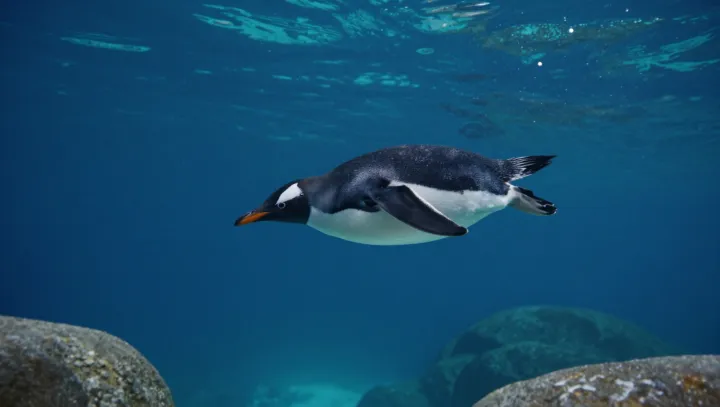
A penguin's formal attire is less a fashion statement than a wager on how light behaves. The contrast has a purpose. Dark feathers cover the back, while the belly is pale; together, they make a swimming bird harder to distinguish from its surroundings, though never invisible.
The trick depends on perspective. Countershading works because a predator looking down may see the dark back merge with the deeper water below, while one looking up may have trouble separating the white belly from the bright surface. It is camouflage, not armor. Seals and other predators can still detect and catch penguins, especially when movement, water clarity, or viewing angle gives them away. The pattern also illustrates natural selection: coloration that helps birds avoid predators can improve their chances of surviving and reproducing.
The black and white portrait, however, leaves out some of the best details. Emperor and king penguins carry yellow or orange markings around the head and neck, and some penguins have vivid bills or yellow crests. Color has another audience. Such markings can play a role in signaling to other penguins, including potential mates, although their precise functions vary among species. On land, a colony can look anything but monochrome. Beneath the surface, that same bird becomes a study in contrast, its outline shifting with the light.