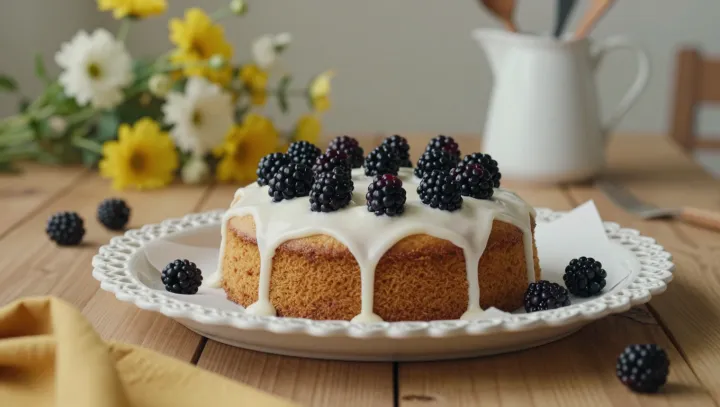
Blackberry juice is more than a stain: it is a chemical color test spread across a cake. Against flowing white icing, the fruit can leave pink streaks, violet pools or muted blue patches, even when the berries come from the same bowl. Acidity helps explain the difference. So does the icing itself.
The chemistry is less fixed than the decoration suggests. Blackberries contain anthocyanins, pigments whose molecular structures shift with pH, the measure of how acidic or alkaline a mixture is. In more acidic conditions, these pigments tend toward red and pink; as acidity falls, purple and blue forms can become more noticeable. The effect is not a simple switch. Individual pigments respond differently, and strongly alkaline conditions can cause their color to fade as the molecules break down.
A baker has more than acidity to reckon with. A little lemon juice can push a berry glaze toward pink, but it also changes the flavor, while a heavier hand with the juice can deepen the color simply by adding more pigment. Sugar, fat and the opacity of the icing affect how that color looks, as do the ripeness and variety of the berries. A quick test in a spoonful of icing offers a better guide than a promise of any exact shade. On the finished cake, a dark berry rests above a pale ribbon, with chemistry written in the space between.