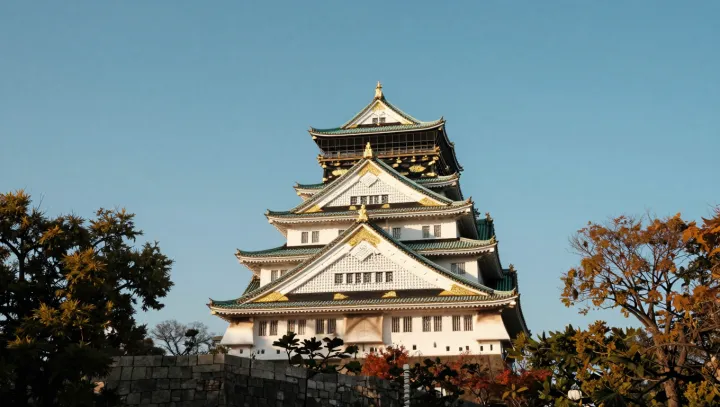
Osaka Castle's main tower is less an untouched relic than a carefully staged encounter with the past. The contrast is deliberate. Behind its layered roofs, white walls and gold ornaments stands a reinforced concrete building, designed to house a museum rather than serve as a feudal fortress.
The break with the past runs deeper than the facade suggests. Toyotomi Hideyoshi built the first castle as a seat of power, but it was destroyed during the siege of Osaka. A replacement tower built under the Tokugawa shogunate was later struck by lightning and burned. The present tower rose through a public fundraising campaign, its exterior drawing on historical images rather than surviving as an original wooden structure. Inside, galleries display armor, historical documents and accounts of the castle's turbulent past.
The reconstruction changed the visitor's experience as much as the skyline. Concrete made room for museum galleries and modern amenities, including elevators, while the exterior offered the spectacle of a traditional donjon. The surrounding stone walls and moats tell another part of the story: much of the visible fortification belongs to the Tokugawa rebuilding, not Hideyoshi's earlier castle. What looks like a single monument is a meeting of different eras, assembled around losses that visitors cannot see. Above the museum floors, gold ornaments catch the light on a tower that remembers what it cannot quite restore.