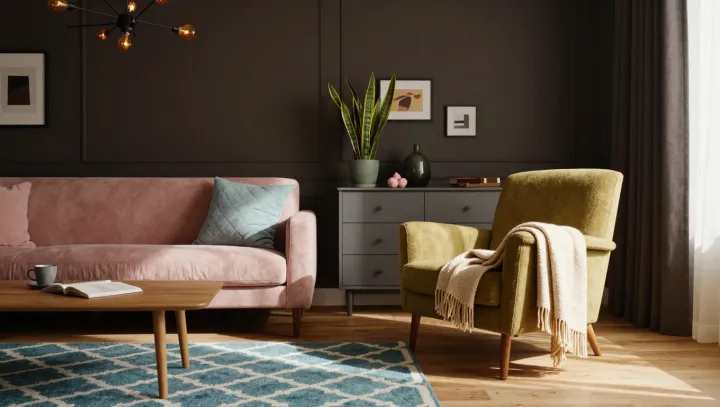
A larger rug can rescue a room from looking like a collection of unrelated furniture. The difference is often underfoot: when a rug reaches beneath the sofa and chairs, it gives their separate shapes a shared visual boundary. Size changes the conversation.
A small rug, by contrast, can leave the coffee table stranded in a patch of fabric while the seating sits beyond it. The eye reads those gaps as interruptions, weakening the visual grouping that makes an arrangement feel intentional. A useful starting point is to place at least the front legs of the sofa and chairs on the rug; in a generous room, all four legs may fit. Measure first. Leave a visible border of floor around the rug, and check that doors can open without catching its edge.
Pattern deserves as much attention as size, though it should work in service of the furniture rather than compete with it. A blue patterned rug can lend a seating area definition while picking up a color from cushions, artwork, or upholstery; a larger motif may suit substantial furniture, while a finer pattern can bring texture without dominating the view. Consider the pile, too. A low pile is generally easier to clean and lets chairs move more freely, while a thicker surface offers a softer feel underfoot. Use a suitable rug pad to reduce slipping and protect the floor. Then let the room settle: the furniture remains distinct, but the ground beneath it gives each piece a place.