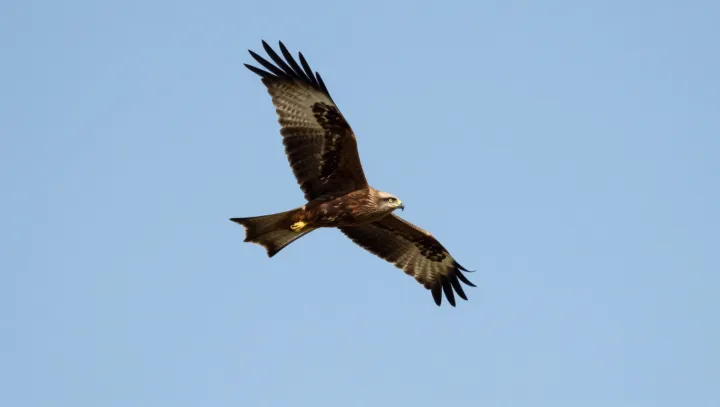
A harrier can hunt what it cannot see. Flying low over grassland or marsh, it searches with sharp eyes while listening for the movements of animals concealed below. In some species, a ring of feathers around the face helps turn those faint sounds into useful clues. The grass offers imperfect shelter.
The face is more than decoration. Known as a facial disc, its stiff feathers help direct sound toward the ears, much as the facial feathers of an owl do. Auditory localization then helps the bird judge where a sound originates: differences in when a sound reaches each ear, and in its intensity, can provide directional information. A rustle matters here. For a hunting northern harrier, the noise of a vole moving through cover may reveal a target that vegetation hides from view. The bird can then drop toward it, extending its legs and talons to seize it. Hearing does not replace vision; the two senses work together as conditions permit.
Low flight is a calculated bargain. Staying close to the ground puts a harrier within reach of faint sounds and gives it a better view into gaps in the cover, though vegetation can still obscure a target or complicate an attack. Long wings support the slow, buoyant flight typical of its search, often with the wings held in a shallow V. Not every plunge succeeds. Wind, background noise and the prey's own stillness can all make detection harder, and the importance of sound varies with the situation. Above the grass, the hunter passes almost silently; below it, the smallest movement may betray a life.