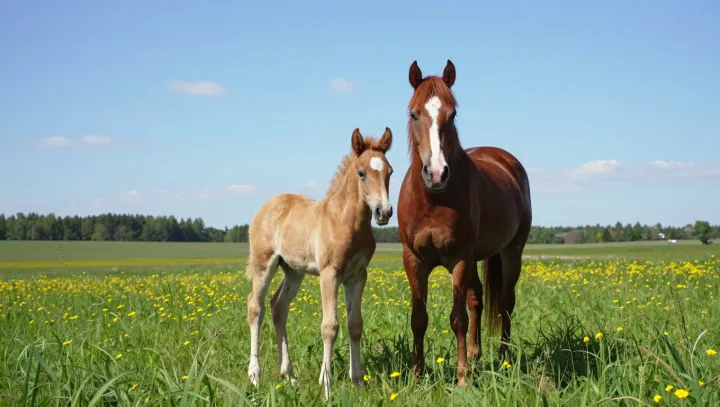
A foal's first steps are less a miracle of learning than a head start before birth. Most foals rise within an hour or two and can run during their first day, although their initial attempts are often unsteady. A human infant, by contrast, usually needs months to develop the strength and balance to stand.
The difference begins before birth. Horses are a precocial species: their young arrive with relatively mature sensory and motor systems, shaped by an evolutionary history in which staying close to the herd mattered. Proprioception, the sense of body position, supplies information from muscles and joints; spinal neural circuits help organize rhythmic leg movements. Neither system works alone. Vision, balance organs and feedback from the ground help the foal adjust each step, while practice rapidly improves coordination.
Human babies face a different bargain. They are born with comparatively immature motor control and spend much of their early life developing the strength, balance and coordination needed for upright movement. Differences in gestation, body proportions and patterns of brain development all contribute; no single explanation settles the comparison. A foal's early mobility is not evidence that it has learned everything. It still has much to master. But those trembling legs carry a striking inheritance: a body prepared, before its first breath, to move.