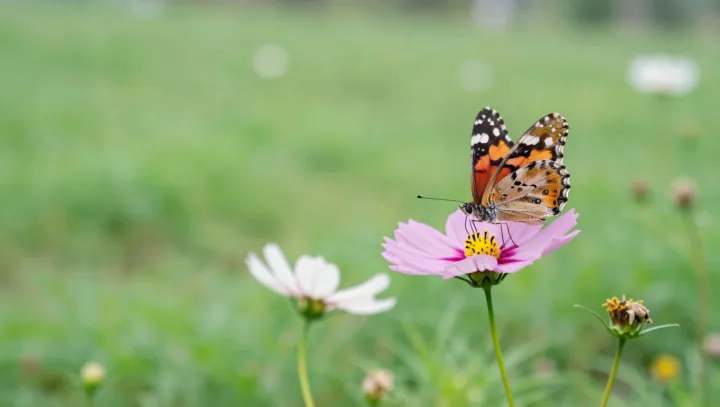
A butterfly's armor is also its limit. With no bones inside, the insect relies on an exoskeleton to support and protect its body and give muscles places to attach. The arrangement is light enough for flight, but it poses a problem during growth: the hardened outer covering cannot stretch indefinitely.
The solution is less like stretching than changing clothes. During its feeding life as a caterpillar, the butterfly grows through a series of molts. First comes apolysis, when the old outer cuticle separates from the living tissue beneath it and a new cuticle begins to form. Then comes ecdysis: the old covering splits, and the caterpillar works its way out. For a short interval, the new covering is soft enough to expand, helped by the intake of air or fluid. It then hardens. Chitin, a structural material in the cuticle, helps give the covering its strength. Each molt leaves room for more growth, though the exposed insect is vulnerable while its new covering firms up.
Metamorphosis makes the final change especially dramatic. The caterpillar sheds its skin to reveal a chrysalis, within which its body is reorganized before the adult emerges. The butterfly pumps fluid into its crumpled wings, expanding them before they harden; it does not molt again or grow larger as an adult. The discarded coverings trace a life built not on an expanding frame, but on a succession of boundaries left behind.