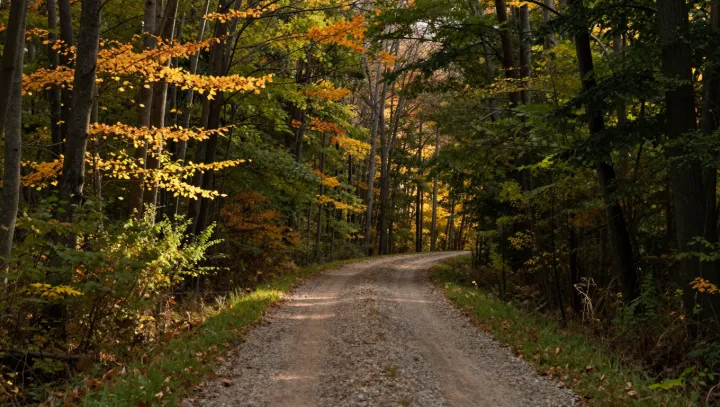
Yellow is usually a revelation; red is often a fresh invention. Along a woodland path, leaves that shared a green canopy can take different routes toward the ground, because some pigments were present all along while others are manufactured as the tree prepares to shed its foliage.
The green disguise goes first. As days shorten and temperatures fall, many trees begin leaf senescence, a process that allows them to recover useful nutrients before leaves drop. Chlorophyll, the pigment that helps capture light for photosynthesis, breaks down. Then come the yellows: carotenoids, present in leaves throughout the growing season, become visible when the dominant green fades. Not every tree follows the same timetable, and weather can change how long the colors remain.
Red demands a different explanation. Many leaves make anthocyanins during senescence, drawing on sugars that can accumulate as transport out of the leaf slows. Cool, sunny conditions often favor their production, although species and local weather both matter. These pigments may help shield vulnerable leaf tissue from excess light while the tree recovers nutrients, but scientists still debate how much that protection explains their presence across species. The distinction is not absolute. A leaf can contain both carotenoids and anthocyanins, with their proportions helping produce shades of orange or russet. Beneath the canopy, what looks like a single farewell is a collection of separate negotiations with the light.