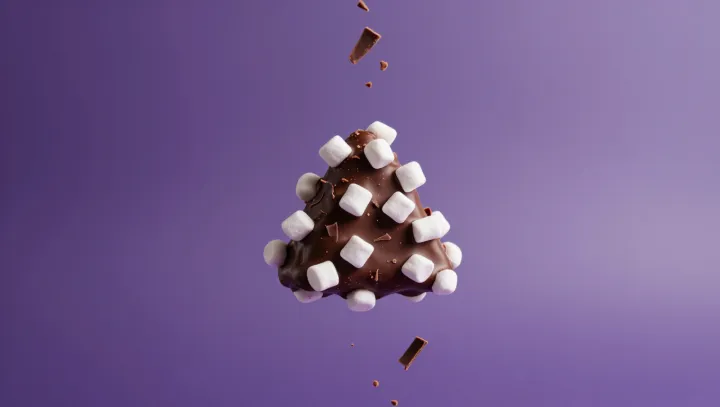
The original marshmallow was closer to medicine than candy. Preparations made from the marshmallow plant used its root, whose gummy mucilage was valued for soothing irritated throats. The sweet that bears its name now owes its softness to a different substance: gelatin. The plant has largely disappeared from the recipe.
The transformation was less a leap than a gradual sweetening. In early preparations, the root extract could be combined with honey or sugar; later, French confectioners whipped marshmallow extract with sugar and egg whites to make a soft sweet. Air changed everything. Beating incorporated bubbles into the mixture, giving the confection a lighter texture, but extracting and preparing the plant material demanded considerable labor. A treat made by hand was not easily made in quantity.
Gelatin solved the manufacturing problem, though it also changed the identity of the sweet. Derived from animal collagen, it forms a network that helps stabilize an aerated mixture of sugar, syrup and water as it cools. The result is a foam that can be produced with greater consistency, without processing marshmallow roots. Mechanization made the confection still easier to shape and package, while gelatin gave manufacturers a reliable setting agent. For vegetarians, that substitution matters: conventional gelatin is animal-derived, although some marshmallows use alternatives. The name remains a small memorial to a plant that the familiar white pillow no longer needs.