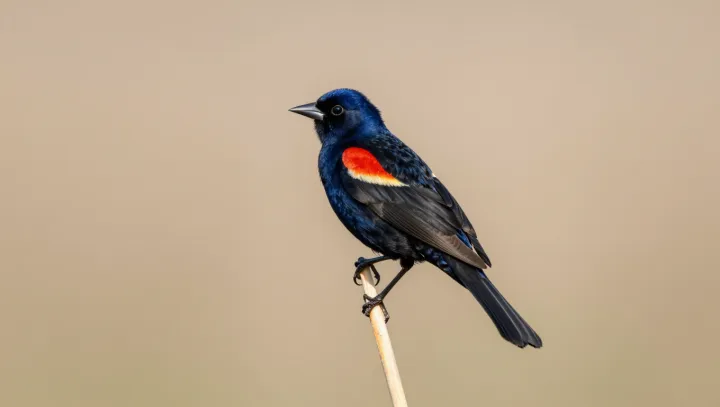
A flash of red can save a fight, but it can also invite one. Male red-winged blackbirds raise bright shoulder patches during territorial encounters, advertising their willingness to defend a place. The color is not always on display. Dark feathers can cover much of the red when a male holds his wings differently.
That discretion makes sense. A territory offers access to nesting space and potential mates, but defending it consumes energy and exposes its owner to injury. The patches, known as epaulets, are part of a signaling system: a male can spread them during a display while calling or confronting an intruder. The signal may deter a rival without a physical clash, though it does not guarantee victory. A visible badge can also draw attention from other males and, potentially, predators.
Dominance, then, is not a message worth broadcasting without pause. Territoriality puts a premium on being noticed by the right rival at the right moment; at other times, concealment may reduce the risks of attracting attention. This flexibility distinguishes an adjustable display from a permanently conspicuous ornament, although the precise balance of costs will vary with circumstances. Sexual selection helps explain why such signals persist: males that hold desirable territories may gain mating opportunities. Yet the same advertisement that protects a claim can make its owner a target. On a folded wing, the red waits.