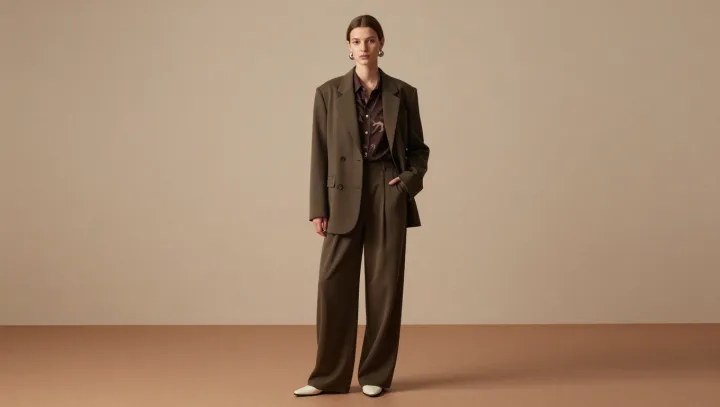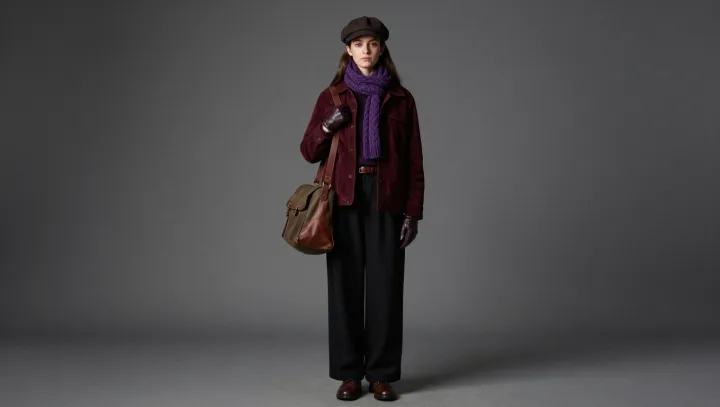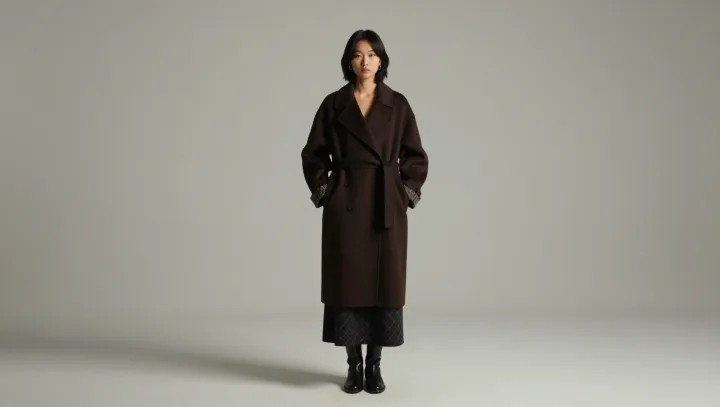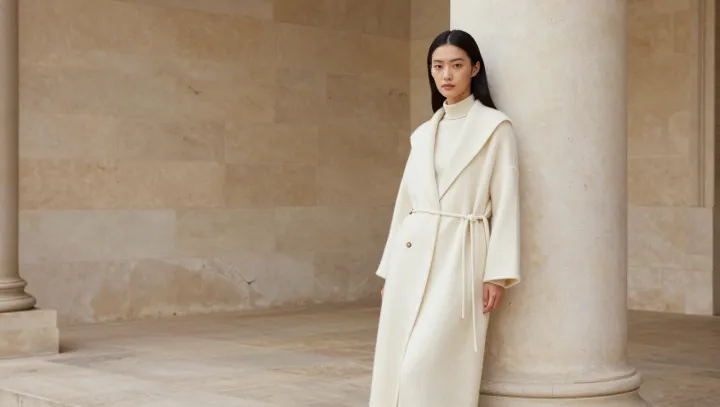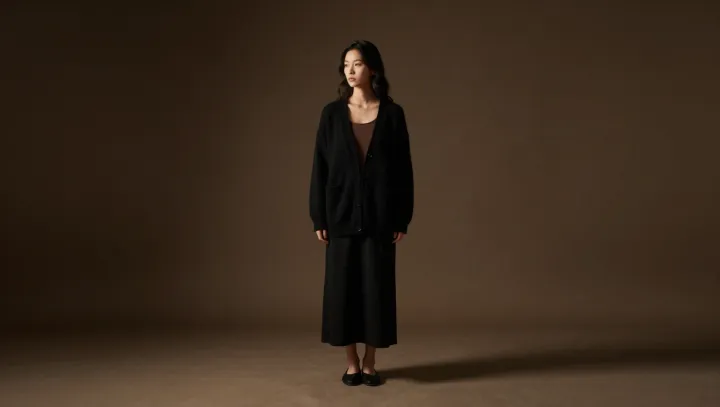
Brown can sharpen an all-black outfit without making it louder. Set between a black cardigan and a long black skirt, a brown top interrupts the dark surface while preserving its restraint. The difference is quiet. Even when the garments appear equally dark, their colors need not behave as one.
Brightness is not the only route to contrast. Luminance describes the light reflected toward the eye, while hue distinguishes color families; a deep brown and a black can have similar luminance yet remain distinct in hue. Brown's warmer coloring gives the eye another cue for separating the top from the cardigan and skirt. The boundary matters. Where two fabrics meet, that change in color helps define the layers instead of allowing them to merge into a single dark shape. The effect depends on the particular fabrics and lighting, so a nearly black brown may offer only a faint distinction.
Texture makes the contrast more persuasive. A matte brown knit beside a smoother black cardigan can reflect light differently, giving each surface its own character even when both remain subdued. A softer or glossier skirt may add another variation, though none is required for the color pairing to work. Proportion counts too. A narrow glimpse of brown beneath the cardigan creates a restrained accent; a larger visible panel makes the separation more pronounced. The outfit stays dark, but its shadows no longer speak in quite the same voice.