The tea shelf is less a botanical collection than a study in human choices. Green, black, and white teas can all come from Camellia sinensis, a relative of the ornamental shrubs prized for layered flowers and dark evergreen leaves. The plant is only the beginning. What happens after picking changes the cup.
The sharpest distinction is not color but oxidation. Once leaves are disrupted, enzymes including polyphenol oxidase act on catechins, producing compounds that deepen color and alter flavor. Green tea makers limit this reaction by heating the leaves, often through steaming or pan firing, before drying them. Black tea takes another route. Its leaves are typically withered and rolled, allowing substantial oxidation before heat and drying halt the process. The result is generally darker and more robust, though growing conditions and workmanship leave ample room for variation.
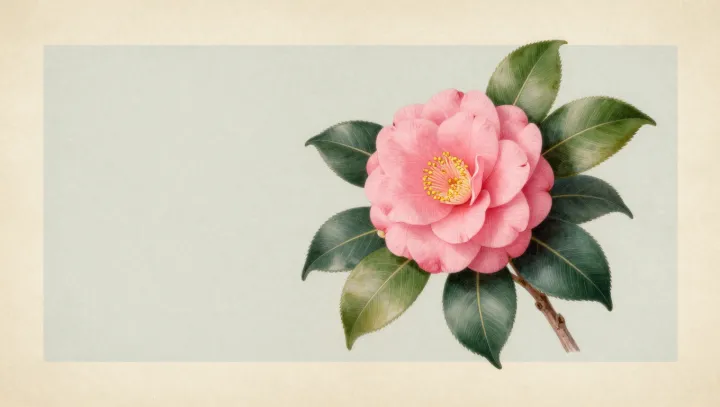
White tea makes a quieter argument for restraint. Often made from young buds and leaves, it is usually withered and dried with minimal handling; some oxidation can still occur as the leaves lose moisture. Its delicate reputation is no guarantee of a single flavor, since cultivar, harvest, and processing all matter. Nor is every garden camellia a tea plant: the genus contains many species, some grown chiefly for their flowers. In the illustration, the layered bloom commands attention; in the cup, it is the leaf that holds the story.