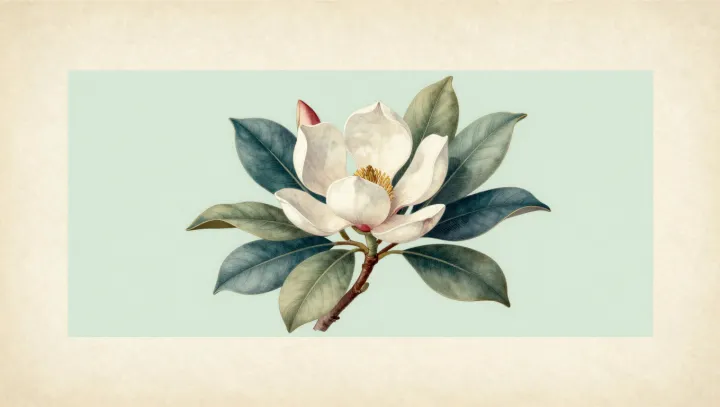
The southern magnolia keeps its pollen waiting. Before a flower releases its own grains, its stigma is receptive to pollen carried in from another bloom. This sequence, called protogyny, gives cross-pollination an opportunity: a visitor can deliver foreign pollen before the flower begins its male phase. Timing does the work.
The arrangement is less tidy than it looks. A fragrant white flower can attract beetles and other insects that move among blooms, picking up pollen from anthers in the male phase and depositing it on receptive stigmas elsewhere. After its female phase, the flower closes and later reopens as its anthers release pollen. The visitor is the bridge. Because flowers on the same tree can be at different stages, however, pollen may still travel between them; separating the phases reduces the opportunity for self-pollination within one flower, but does not eliminate it.
The reward is genetic possibility, not a guarantee. Cross-pollination can increase genetic variation among offspring, while successful fertilization still depends on pollen reaching a compatible stigma and growing a pollen tube toward an ovule. Weather, insect activity and the availability of other flowering trees can all affect that journey. Beneath broad, leathery evergreen leaves, the bloom offers a brief meeting place for strangers before becoming a source of pollen itself.