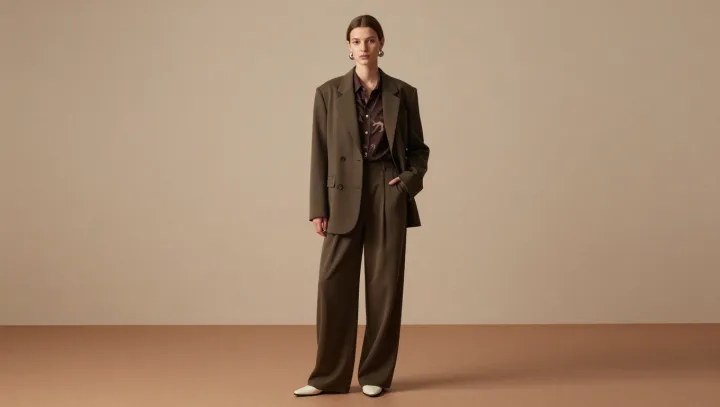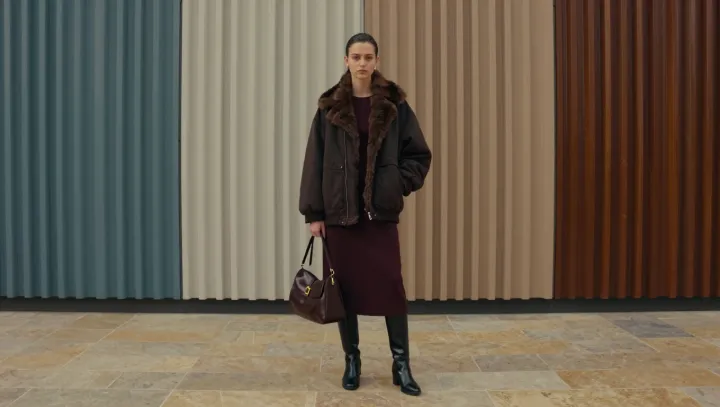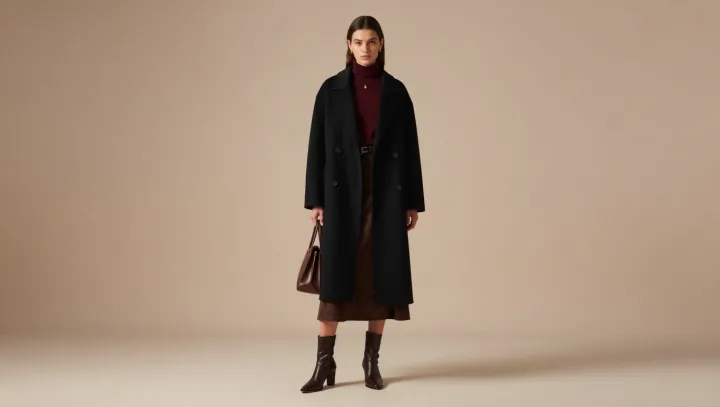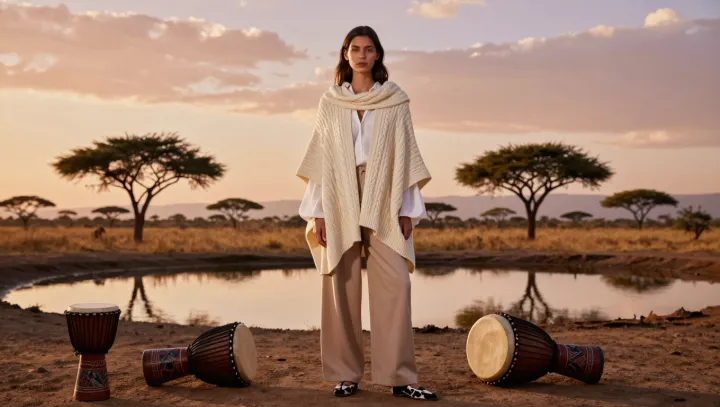
Light catches the raised loops of a knitted shawl differently from the smooth plane of a white shirt. That difference does the work. Set against beige wide-leg trousers, the shawl gives an outfit with little color contrast a sense of depth, even before the wearer moves.
The most effective contrast here is not between shades but between surfaces. A close-woven shirt can present a relatively even face to the light, while protruding yarns in a knit create tiny highlights and shadows. Diffuse reflection scatters light across those surfaces; specular reflection produces more concentrated highlights, particularly where a smoother fabric faces the light. Weave matters, too. Its structure determines how yarns sit together, leaving a surface that may appear flat, ribbed or irregular. The effect changes with the fiber and finish, so a crisp cotton shirt and a soft knit need not behave like garments made from shinier yarns.
Shape is the quiet partner in this arrangement. Wide trouser legs fall in folds that alternate between light and shadow, while the shawl overlaps the shirt and creates a visible edge. These changes give the eye cues about distance and volume without relying on a bright accent. Movement sharpens the effect. As the wearer turns, folds shift and the shawl catches light at new angles; even the white and beige may appear warmer or cooler under different lighting. In stillness, the outfit is a study in restraint; in motion, its surfaces begin to speak.