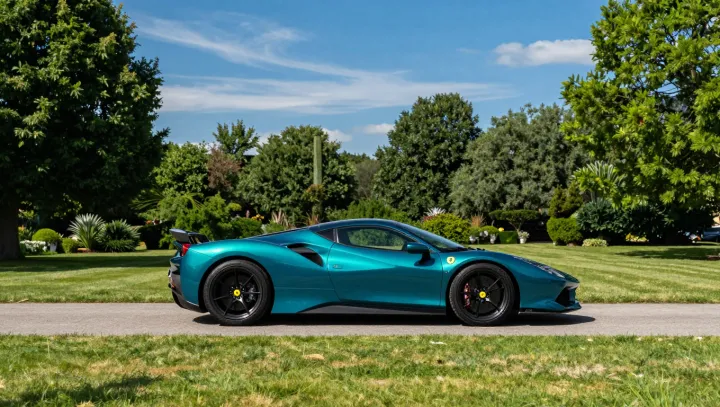
A lighter sports car may need a wing precisely because it is light. Less mass helps the dark green machine change direction, but a fixed wing can press its tires harder against the road when speed rises. The apparent contradiction is the point: weight and aerodynamic load arrive with different costs.
Mass is the burden that never switches off. Remove it, and inertia falls, reducing the force needed to accelerate, brake, or change direction. The tires have less work to do in a corner, and suspension components can respond more readily to changes in the road. Downforce works differently. A wing deflects air upward, generating a downward aerodynamic force that increases the load on the tires without adding comparable mass to the car. That extra load can increase grip, although tire load sensitivity means grip does not rise in exact proportion to the load.
Speed turns that bargain upside down. Aerodynamic forces generally increase with the square of speed, so doubling speed produces roughly four times the downforce if airflow and other conditions remain comparable. At low speed, the wing contributes little; at high speed, it can steady the rear and support faster cornering. But downforce brings drag, which consumes power, and too much rear load relative to the front can leave the car reluctant to turn. A streamlined body and a fixed wing must therefore work as a pair, their balance shaped by airflow over the whole car. On a fast road, the most useful weight is the kind that disappears when the car slows.