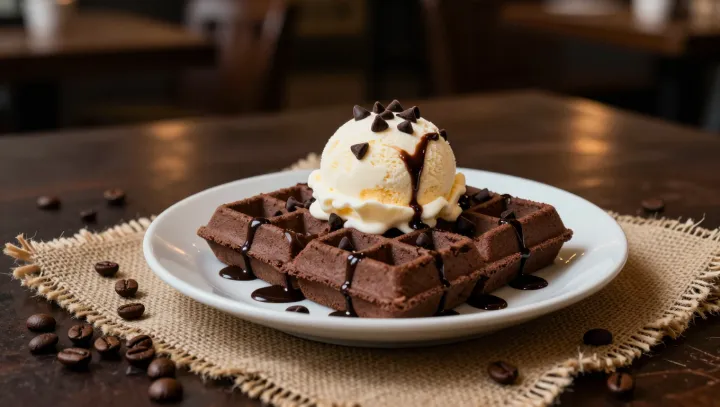
The first bite understates the sugar. A scoop of ice cream resting on a chocolate waffle can taste less sweet when it is very cold than when it has warmed and softened. Nothing magical happens to the recipe; the shift is largely in how the mouth encounters it.
Cold is a capable disguise. Temperature affects taste perception, including the response of sweet taste receptors, and many sweet foods taste less sweet when chilled, although the effect depends on the food and the conditions. A frozen scoop also holds much of its water in ice crystals, while sugars remain concentrated in the liquid between them. As the scoop warms, melting and lower viscosity change how quickly that sweet liquid reaches the tongue. Melting does not create sugar, and it does not guarantee that every spoonful will taste sweeter.
The waffle pays a price. Melted ice cream seeps into its pockets and softens the crisp surface, trading crunch for a sauce that carries cocoa, chocolate chips and syrup through the bite. Warmer chocolate can release aroma compounds more readily, adding another dimension to flavor, though its bitterness may stand out against the sweet cream. Proportion matters here. A little melt binds the components; too much can flatten their contrasts and leave the waffle soggy. What begins as a stack of separate pleasures settles into a single, sweeter pool.