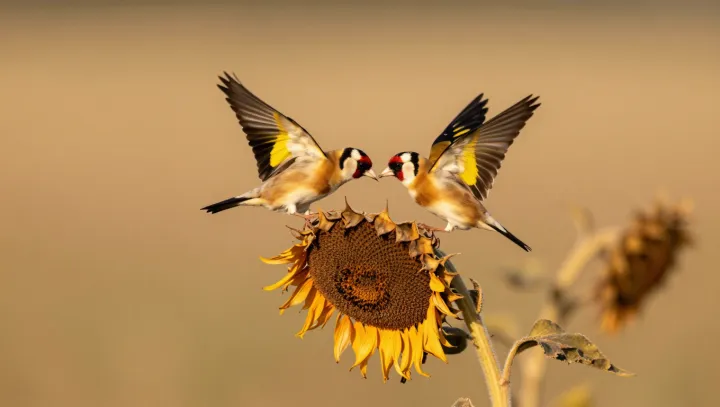
Seeds alone do not tell the whole story of a goldfinch nest. European goldfinches, known for teasing seeds from thistles with slender bills, also bring insects to their chicks. The addition makes sense. A growing bird must build muscle, feathers and organs while meeting the energy costs of staying alive.
Growth is an expensive enterprise. Insects supply protein, whose amino acids support the synthesis of new tissues, as well as fats and other nutrients. Seeds can provide substantial energy and protein too, but their nutritional composition varies by plant and stage of development. Parents feed nestlings a mixture that can include softened or regurgitated seeds and small invertebrates, depending on what is available. The menu is not fixed. Local habitat, weather and the supply of plants and insects can all influence what adults collect.
The nest also exposes a tension in the adult bird's familiar talent. A bill suited to extracting seeds is useful when plants are ready, yet a brood's growth cannot simply wait for every seed head to ripen. Young chicks have different nutritional demands from adults, and their diet reflects both those demands and the food their parents can find. That distinction matters beyond the nest: places that retain seed-bearing plants and support insects can offer birds a wider range of feeding opportunities. On a thistle stem, the adult finds a meal; in the nest, every meal must also become a bird.