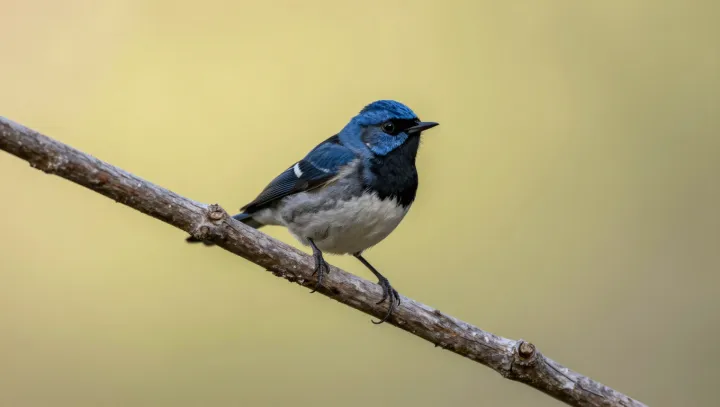
The black-throated blue warbler is a lesson in how appearances can deceive. The male wears a blue back, a black throat and white underparts; the female is mostly olive brown. So pronounced is the contrast that early naturalists classified the sexes as separate species. They belong together.
Evolution offers a plausible explanation, not a complete verdict. The contrast is called sexual dimorphism, and two selective pressures may help account for it. Sexual selection can favor conspicuous male plumage if it helps attract mates or compete with other males. Natural selection can favor less conspicuous coloring in females if it helps them avoid predators, particularly while incubating eggs. These pressures are plausible explanations, though their relative importance in this species is not settled. Bright feathers may carry a cost, too: what catches a mate's eye can also catch a predator's.
The birds' shared life is more revealing than their contrasting colors. Both sexes breed in forests of eastern North America and migrate to the Caribbean for the nonbreeding season. Females build nests and incubate eggs; both parents feed their young. A small white patch on the wing can help identify either sex, although it may be less obvious on a female. Their calls, behavior and breeding relationships, rather than plumage alone, establish that they are members of the same species. In the forest, two different coats conceal a single lineage.