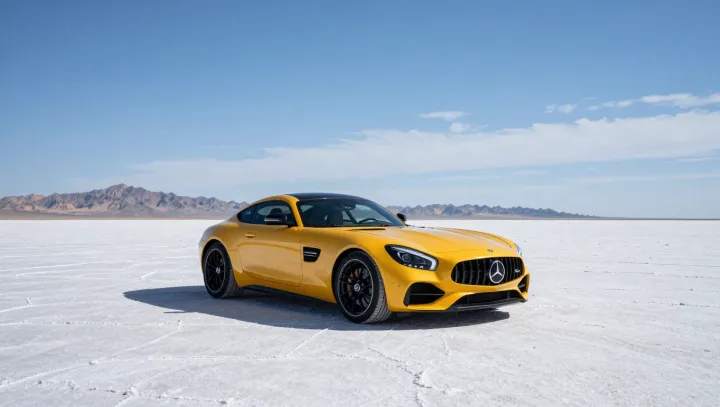
Protection can obstruct perception. In the Mercedes-AMG GT, the low roofline, long hood and small rear windows illustrate a trade-off common to performance cars: the shape that gives a car its distinctive stance can also limit what a driver sees. The roof pillars bring the conflict into focus.
A strong roof has a visual price. Pillars support the roof structure and help form a load path that carries forces through the body during a rollover. Yet the same pillars occupy part of the driver's field of view. This is angular occlusion: an object near the eye can hide a larger area farther away. At an intersection, a pedestrian or an approaching vehicle may briefly disappear behind a front pillar, particularly when its movement matches the driver's changing angle of view. The gap can be consequential.
Good visibility demands more than a glance. A long hood can make nearby objects harder to judge, while a small rear window narrows the view behind; mirrors and cameras can help, but their coverage and image quality have limits. Drivers can adjust their seating position, move their heads to look around pillars and check carefully before turning. No single aid removes every blind spot. In a car built to protect its occupants, the view through the windshield remains a negotiation between structure and sight.