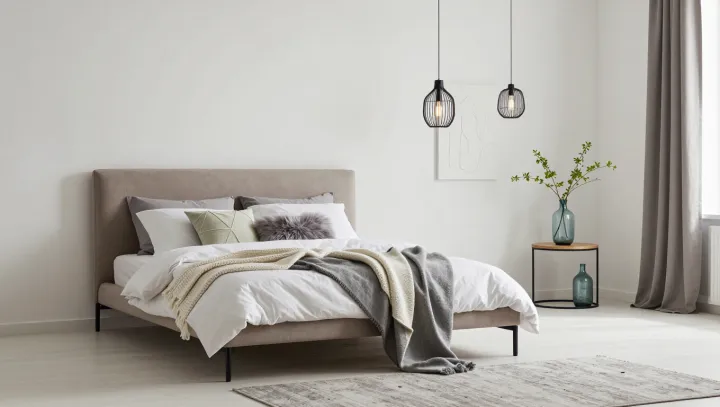
A neutral bedroom need not feel cold. Its warmth can come from what the eye and hand encounter rather than from the color on the walls: a rumpled linen cover, the grain of a timber bedside table, or a pendant that casts a gentle pool of light. Restraint does not require austerity.
Texture does more work than color gets credit for. Layer a wool throw over cotton bedding, add linen pillows, and the bed gains depth even when every piece stays within a narrow range of white, gray and beige. The differences matter up close. Rough and smooth surfaces catch light differently, creating small variations that keep a quiet scheme from looking flat. A pale oak headboard or a pine stool adds visible grain and a subtle tonal shift; neither needs an orange finish to make the room feel inviting. Keep furniture simple, but leave enough variation in the materials for the room to feel used rather than staged.
Lighting is the final test of restraint. A discreet pendant can illuminate a bedside surface without flooding the room, while a shaded lamp adds another pool of light where it is needed. Look at color temperature when choosing bulbs: a lower value gives light a warmer appearance, even against cool walls. The color rendering index offers a separate indication of how faithfully that light reveals material colors. Put both to work. The reward is not a room pretending to be warmer than it is, but one where a folded blanket and a sliver of wood can hold the last light.