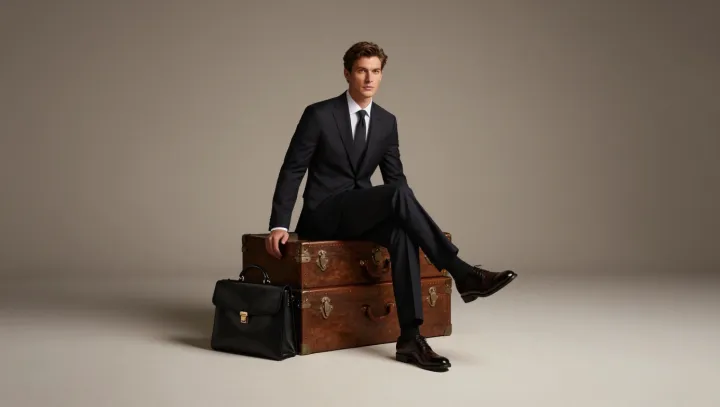
Sharp tailoring gets too much credit. The modern power suit is less a cousin of runway gowns than a polite descendant of armor and boiler suits, built to project threat and discipline before beauty enters the room. Broad shoulders, stiff fronts and dark, low-contrast surfaces echo cuirasses and combat coats, where plates and layered textiles once redistributed impact and concealed weakness.
Status here is engineered, not styled. Military pattern cutting, with its obsession over seam placement, load distribution and range of motion, set the template for the suit’s rigid chest piece and mobile arms, turning the torso into a shield while keeping elbows free to work. Industrial uniforms then added standardization and serial production, using modular sizing, abrasion-resistant weaves and colorfast dyes to turn bodies into interchangeable units of labor and command.
Fashion mainly arrived later as camouflage. The pinstripe recalls chalk marks on cloth in workshops and accounting rooms, not aristocratic whim, while the business shirt’s collar descends from detachable uniform pieces designed for hygiene and easy laundering. What looks like elegance is really logistics: a system for controlling posture, hiding sweat, smoothing hierarchy and letting power move through crowds without ever needing to raise its voice.