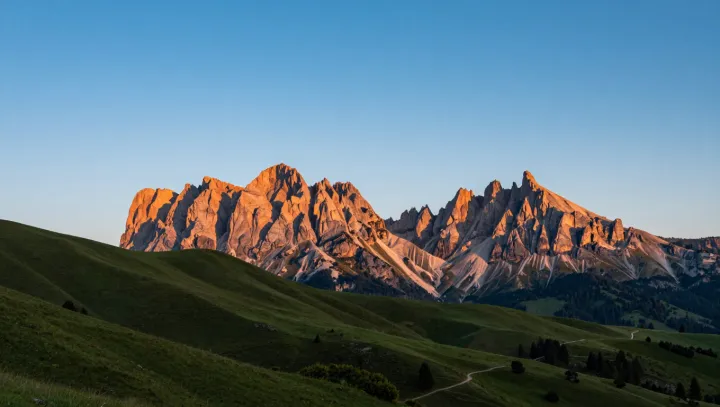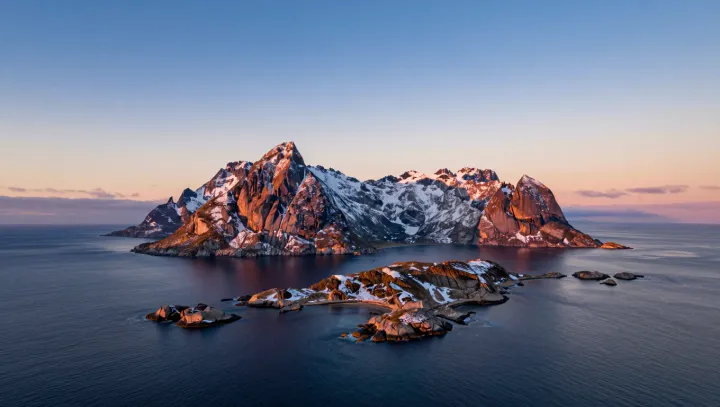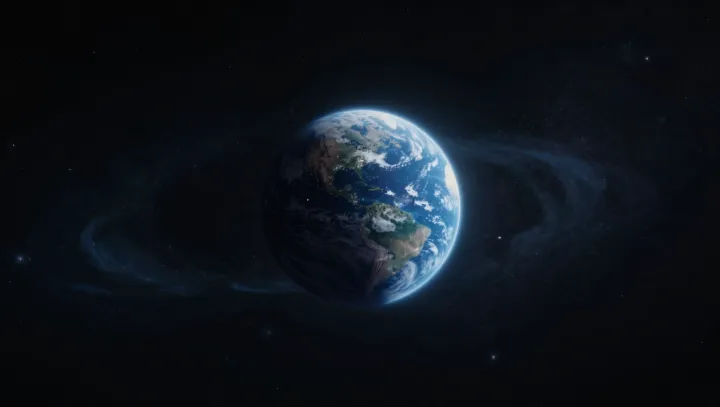
Sea level, not land, would win. Strip away mountains, trenches and plateaus, and a mathematically perfect sphere emerges, wrapped in a single ocean roughly 2.7 kilometers deep. That depth comes from dividing the total volume of the hydrosphere by the surface area of an idealized sphere, a blunt calculation that erases every contour humans call geography.
This thought experiment exposes how deceptive dry ground is. Continental crust looks massive, yet when averaged over the geoid and global topography, water behaves more like a thin planetary film than a bottomless abyss. Most ocean basins are several kilometers deep already, so once the extremes of relief are removed, excess volume spreads sideways until every point on the surface sits below a uniform gravitational potential and a uniform sea surface.
The scenario also reframes common anxiety about rising seas. The issue is not a shortage or surplus of water in absolute terms, but the fine balance between solid Earth elevation, isostatic adjustment and where that mobile layer chooses to settle. On a smoothed planet, there would be no shorelines to defend, no continental shelves to map, only one continuous hydrologic shell pressing evenly against rock.