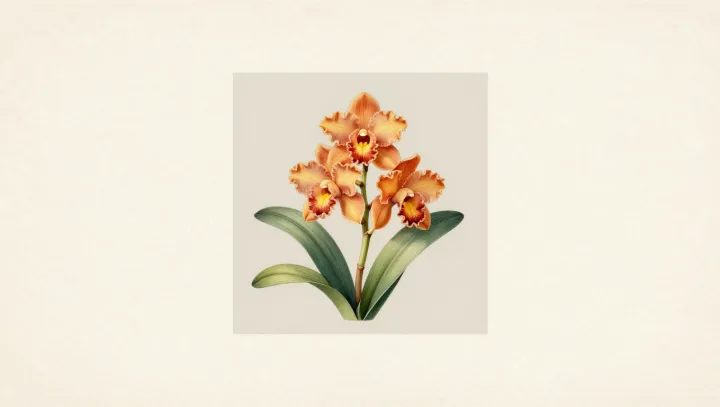
Cattleya sits at the center of modern orchid breeding, even when its face has vanished from the flowers on sale. Thick petals, oversized lips and extravagant color blocks made tropical American Cattleya species the default template once commercial hybridization began under glasshouse conditions.
The real surprise is how ordinary the mechanism is. Cattleya carries chromosome numbers and meiotic behavior that pair smoothly with close relatives such as Laelia and Brassavola, so early breeders gained fertile offspring instead of sterile curiosities, locking Cattleya DNA into the breeding pool. Polyploidy, the multiplication of whole chromosome sets, amplified those genes again, boosting cell size, pigment density and flower longevity, traits the cut-flower trade paid for in cash.
What looks like creative chaos in today’s hybrids is actually a narrow genetic funnel. Once Cattleya-derived lines dominated commercial pedigrees, breeders kept crossing back into that stock to preserve flower size, ruffled labella and strong fragrance, even while selecting away the original wild silhouette. Under the label of complex hybrids, many genera now carry Cattleya segments stitched through their genomes, a quiet scaffold holding together shapes and colors that no wild plant ever wore.