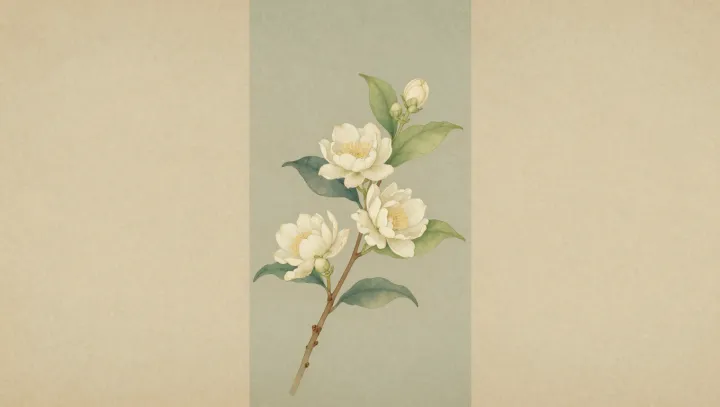
Pale flowers are not underachievers; they are specialists. To human eyes they fade into the background, yet to bees, moths and flies they appear as high-contrast targets, wired into very different sensory hardware than ours.
Color is only one channel. Often, not even the main one. Many pale corollas carry bold ultraviolet patterns, called nectar guides, that sit invisible to humans but stand out sharply to insects whose photoreceptors extend into shorter wavelengths. Against a green canopy that reflects little ultraviolet, these guides create a kind of optical runway, steering pollinators directly toward nectar and anthers while reducing search time and wasted visits.
Low light turns subtle petals into bright signals. In dim forest understory or at dusk, high saturation pigments buy little extra visibility, while light petals maximize reflectance and boost contrast for compound eyes with limited photon capture. At the same time, many pale flowers invest heavily in volatile organic compounds, building intense scent plumes that travel far and are decoded by the insect olfactory system with near-receptor precision. Energy that might have gone into red or blue pigments is instead allocated to scent biosynthesis and nectar volume, tightening the cost–benefit math of reproduction.
Background clutter finishes the argument. In habitats already full of saturated colors, a nearly white bloom becomes the rare visual outlier in an insect’s spectral space, especially when paired with distinctive petal shape and polarization cues. What looks understated to human trichromatic vision is, in effect, a targeted advertisement built for another nervous system entirely.