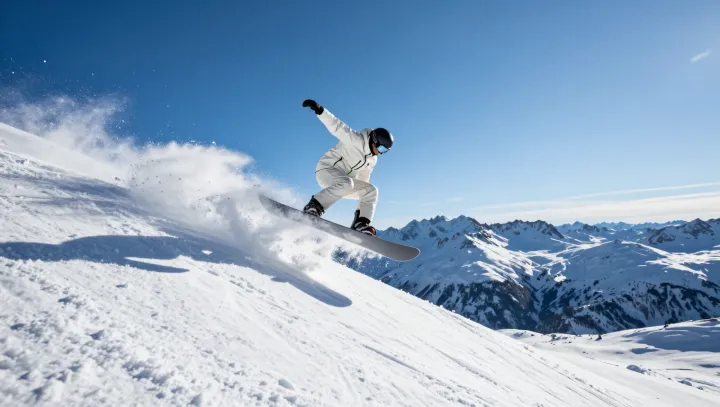
Fresh snow, not the rider, dictates the first lesson: skill is written in tissue, not in willpower. Each launch off a slope sends almost identical streams of sensory data into the spinal cord and motor cortex, where neurons fire in tight patterns that can be timed in mere milliseconds against the moment board meets ground.
The bold claim from neuroscientists is that repetition, not talent, does the heavy lifting. With every attempt, error signals from the cerebellum tweak synaptic plasticity in motor cortex and basal ganglia, pruning inefficient firing routes and reinforcing those that stabilize the knees and align the hips just before impact. What began as shaky, conscious effort becomes procedural memory as circuits shift from prefrontal supervision to faster subcortical loops, shrinking reaction windows until adjustments occur before the rider can think.
More radical still is the assertion that this invisible tuning is now literally visible. High‑resolution functional MRI and diffusion tensor imaging track altered activation maps and denser white‑matter tracts along motor pathways after intensive board training, while single‑neuron recordings in lab analogs show refined spike timing. The landing that feels automatic is, in effect, a rewired movement network, etched by thousands of falls and quietly preserved in the brain’s circuitry.