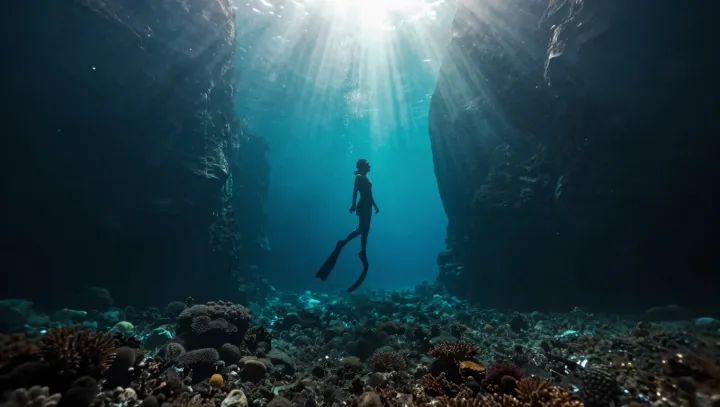
Bright turquoise water does what your meditation app keeps promising but rarely delivers. The boat barely moves. Light scatters off the sandy bottom; the surface stays simple, slow, legible to the eye.
The blunt truth is that your nervous system trusts this scene more than any guided voice. Wide horizon, high luminance, and shallow depth cues tell the visual cortex and vestibular system that threats are distant, which downshifts the locus coeruleus and trims norepinephrine release. You do not need intention. You just look. With low visual clutter and almost no sudden motion, the amygdala receives a stable stream of predictable input, so its threat modeling quiets instead of scanning for jump cuts, alerts, or micro-flickers from a screen.
Apps, by contrast, ask for cognitive effort inside the very hardware that is already overloaded. When you “try” to relax, prefrontal control ramps up, the default mode network keeps rehearsing social worries, and the phone in your hand remains a live portal for interruption. The lagoon gives your brain a different job: passive sensory integration. Slow wave patterns, gentle parallax from the drifting hull, and soft ambient sound nudge autonomic balance toward vagal dominance and lower heart rate. Calm arrives not as a skill, but as a reflex written long before code.