A soaked strip of asphalt can behave like a trained art director. Dark pavement, glossy with water, absorbs most wavelengths and drops the scene’s average luminance, so scattered leaves automatically become high-contrast accents that hit the same contrast ratios taught in composition classes.
The odd part is that the order in this mess is not artistic intention but fluid dynamics plus visual neuroscience. Drainage grooves and micro–surface gradients steer water runoff, and the flow field carries leaves into channels that read as leading lines. Once those streaks exist, the visual system applies Gestalt principles such as good continuation and figure–ground segregation, locking our gaze onto these improvised corridors as if they were purpose-built guide rails in a studio shot.
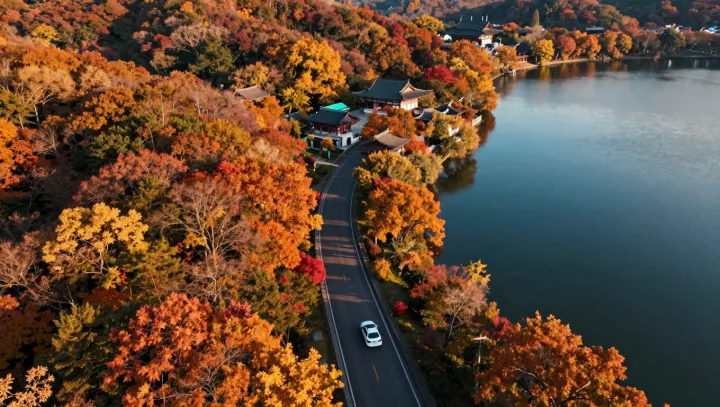
Color theory joins in. Many autumn leaves cluster around warm hues that sit opposite the cool bluish cast of wet asphalt in opponent-process color space, so even casual snapshots land near textbook complementary contrast. Add depth cues from perspective projection along the curb or crack, and the brain infers a vanishing point, granting a thrown-together sidewalk the same structural bones as a carefully planned hero image.