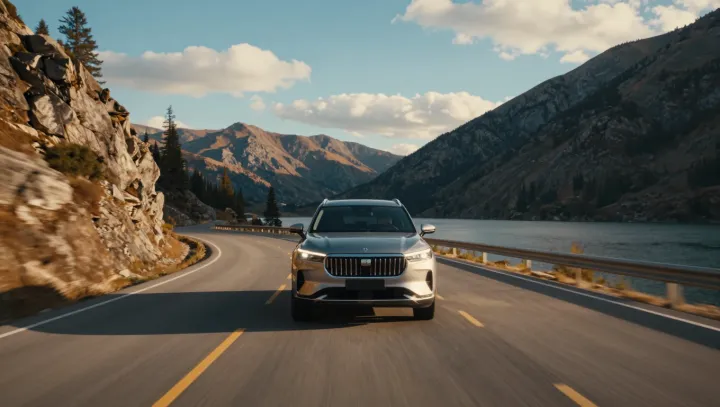
Those white lines do more steering than the wheel. On a mountain road, paint becomes a low-cost interface between Newtonian mechanics and a distracted nervous system, turning raw motion into a story the brain can parse in milliseconds.
Their first trick is speed control. As dashed segments stream past, they generate optical flow, the same phenomenon that lets pilots judge landing rate. Because segment length and gap are standardized, the rate at which they sweep through peripheral vision becomes a proxy for linear velocity and centripetal acceleration, warning the driver when momentum is outrunning grip long before tires start to slide.
Equally subversive is how the lines reshape distance and geometry. On tight curves, designers shorten segments and tighten spacing, amplifying visual density so the bend feels sharper and nearer than it is, nudging earlier braking and smoother corner entry. Edge lines define lane width and vanishing point, giving the visual cortex fixed reference vectors for depth perception and motion parallax on cliffside drops where natural horizons are missing or misleading.
What looks like mere paint is closer to an analog head-up display. It feeds the brain continuous data on angular velocity and road curvature without asking for conscious attention, turning a treacherous sequence of blind bends into something the eyes can predict and the hands can follow.