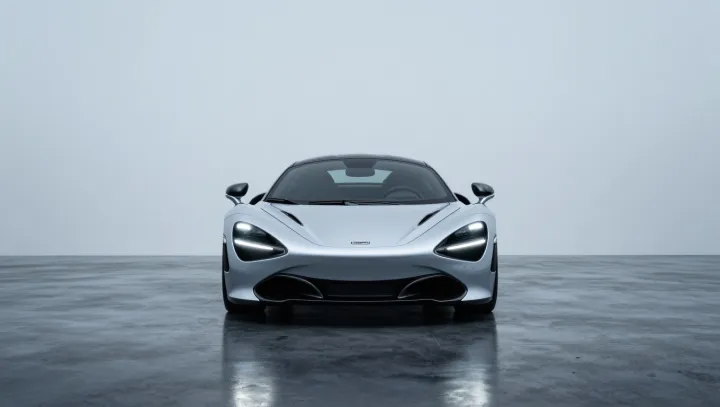
Light slides over the nose. The 720S treats that surface less as bodywork than as an aerodynamic intake, because channels carved beside its headlights guide moving air around the front structure, over the bumper and wheel-arch openings, and toward regions where a pressure differential can load the chassis. No billboard wing required.
That is the smarter bargain, because pressure-gradient management lets the passages behave like packet-routing hardware, sorting air instead of data, while the resulting pressure gradient can create front-axle downforce without the frontal area and induced drag a towering appendage can bring. Airflow is not magic. Boundary-layer control matters as nose geometry shapes where air stays attached before it separates, which can make the car steadier when speed rises, tire wake grows, and steering inputs become less forgiving.
Restraint earns its place. Big wings announce themselves, but the 720S makes its argument in the gaps, where duct geometry turns styling into a working system, reduces visual clutter, and pursues aerodynamic load without claiming that such force arrives free of drag, turbulence, or design compromise. The effect is quiet. That understatement points toward cars whose body panels act as active computational surfaces, their flow fields sensed, modeled, and redirected with the discipline of signals moving through a circuit.