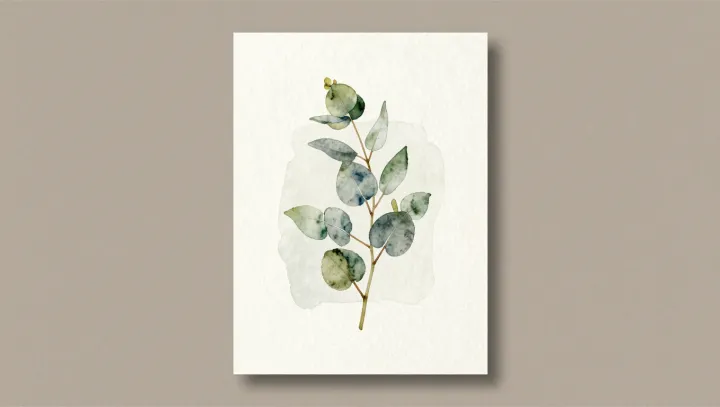
At noon, the leaf narrows. What seems like surrender is, in many eucalyptus species, a calculated geometry: narrow leaf surfaces turn near-vertical, presenting less area to the fiercest solar irradiance when heat, atmospheric dryness, and ultraviolet exposure press hardest. The tree refuses spectacle.
This is no botanical quirk. Leaf energy balance explains the pose: absorbed radiation heats a blade, while convection and evaporative cooling must carry that load away, especially when still air holds heat near the surface. No magic saves water. By shrinking projected area at midday, a vertical blade often runs cooler, reducing vapor pressure deficit and the transpiration pull imposed on xylem water columns as stomata remain open for carbon dioxide uptake. Wind can alter it. Boundary-layer conductance, stomatal behavior, crown density, and species-specific anatomy determine how much relief the posture actually buys.
The bargain is shrewd. Eucalyptus leaves are often isobilateral, with photosynthetic tissue suited to illumination on either face; their long petioles and hanging habit let them accept morning and afternoon light without taking the noon blast full-on. This is architecture, not theater. Rather than assume active paraheliotropism, one should see a durable drought adaptation whose value depends on latitude, weather, and species. The trade-off is plain. A leaf that intercepts less noon light can also surrender carbon gain during the brightest hours, especially where water is plentiful. Noon meets a turned face.