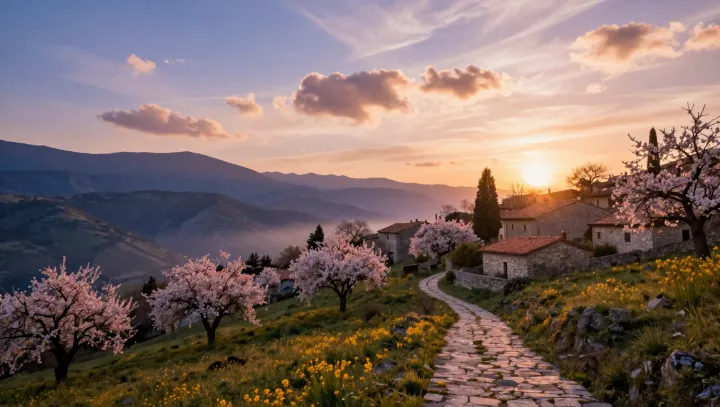
White glare owns the porch. Against it, a painter can set only ocher, viridian, and a bruised red, yet the eye reads noon because pigment is not asked to imitate sunlight; it is arranged to provoke the visual system into completing it. The trick is severe. A pale wall, kept near bare ground, makes every adjoining dark seem heated.
Restraint carries the heat. In simultaneous contrast, a muted blue-gray beside ocher makes the ocher appear hotter than it measures, while chromatic adaptation treats the pale wall as a provisional white point and shifts the rest of the image toward glare. The shadows do the work. Their violet or green cast, laid thinly through scumbling rather than buried under black, preserves the suggestion of reflected light, allowing a road or roof to look bleached without relying on pure white.
Brightness is mostly a bargain. A limited palette forces each hue to borrow force from its neighbor: red earth gains intensity beside a blue-green tree line, and that tree line, deprived of fussy local color, recedes until open air appears to press forward. Nothing is accidental. The result rejects the lazy equation of more paint with more sun; unmixed passages, exposed ground, and a narrowly rationed highlight hold afternoon in suspension, bright enough to feel almost unbearable.