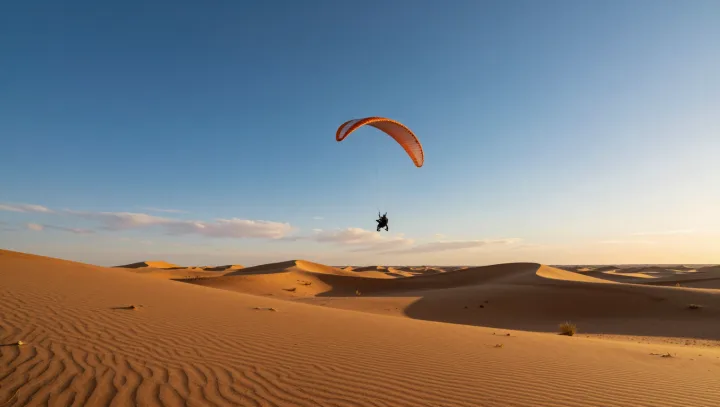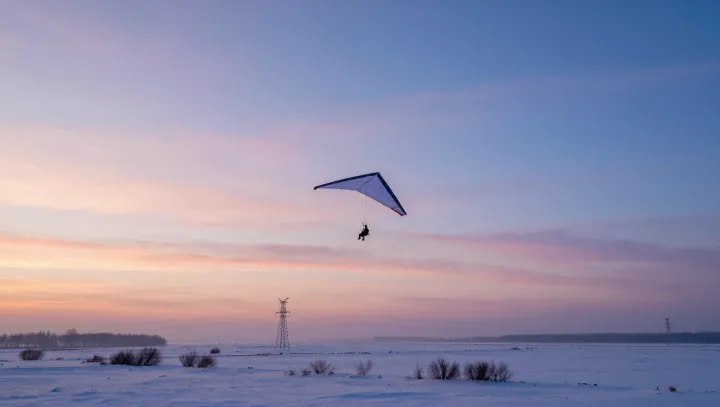
The apparent plunge is usually less catastrophe than accounting. It looks theatrical. Beneath the wing, air parcels rise and fall in columns, and the pilot reads a variometer, ground track, and control-bar pressure as evidence rather than alarm. Only when lift vanishes does the falling picture become an emergency.
Panic is the costly error. A hang glider is not falling through a fixed medium; it is moving through vertical air whose velocity can exceed, cancel, or reverse the wing's own climb rate. Pilots compare indicated airspeed with groundspeed, because a headwind can make progress over land seem poor while the wing remains within a sound energy state. The polar curve sets the bargain: each airspeed produces a known sink rate, and the best glide ratio changes when the air itself descends. Speed-to-fly turns that bargain into action. In hard sink, a pilot may accept a steeper path to leave bad air sooner; in lift, slowing within safe limits can preserve altitude and enlarge the next choice.
The spectacle misleads spectators. A steep bank can tighten a turn inside a thermal, yet bank also raises load factor and stall speed, so calm does not mean casual. It means measuring margin: angle of attack, clearance, wind drift, and distance to a usable landing field. The pilot is not arguing with gravity. At wingtip height, invisible currents have already made the argument, and the quiet response is to listen.