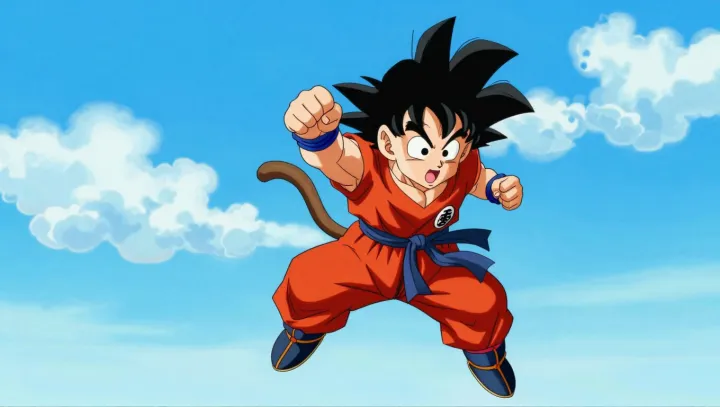
A clenched fist, shaking before it lands, explains Dragon Ball better than any list of victories. The series made force readable: each transformation arrived after training, humiliation, or a rival's challenge, so spectacle carried a moral invoice. Nothing came free. Its power scaling did not erase weakness; it made weakness visible, then made recovery feel earned.
That is the sly bargain. A hero who simply cannot lose becomes furniture, while Dragon Ball repeatedly lets its fighters fail in public, absorb the wound, and return with a changed measure of themselves. Rivals are not decorative obstacles. They are pressure systems. Through them, effort gains a face, envy gains rules, and resilience stops sounding like a poster slogan. The serial narrative converts escalation into emotional bookkeeping: every larger blast records an earlier limit, a debt paid in bruises, discipline, and pride.
Its global reach follows from that accounting, not from sheer noise. Audiences can admire impossible flight because the story preserves a familiar friction: the body stalls, confidence cracks, and somebody stronger waits nearby. Victory still costs. In the end, the bright aura is less a promise of invulnerability than a flare from the moment when defeat has been studied, endured, and answered.