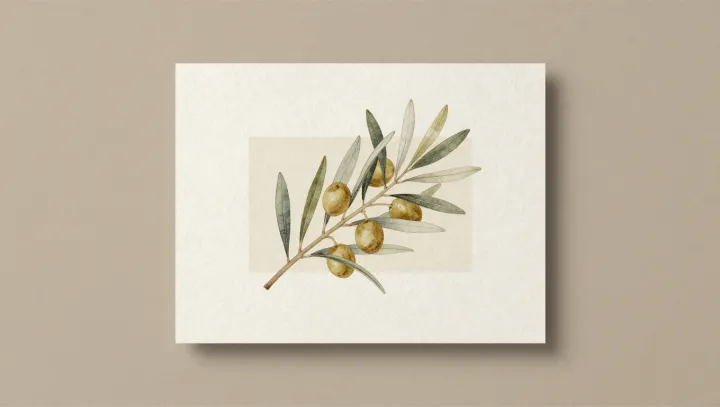
The olive branch makes a sly promise: peace rendered as an emblem, while the small drupes beneath its leaves yield something far less symbolic under pressure. Pressing ruptures plant cells. Out comes olive oil, not a simple fat but a chemically crowded liquid whose identity begins where damaged tissue lets enzymes meet their substrates.
Purity is the wrong romance. The oil phase is dominated by triglycerides, especially those rich in oleic acid, yet its flavor and stability depend heavily on minor constituents: polyphenols, chlorophylls, carotenoids, and volatile compounds. Tiny amounts matter. When crushed fruit undergoes malaxation, droplets merge while oxygen exposure and enzyme activity can reshape both aroma and bitterness.
The familiar symbol therefore hides an argument about force. Mechanical pressure liberates lipids from cellular structures, while the lipoxygenase pathway helps generate green, sharp-smelling volatiles from fatty-acid precursors. Chemistry does not spoil the metaphor. It gives it teeth: beneath a quiet branch, fruit pulp breaks, oil gathers, and peace acquires a taste.