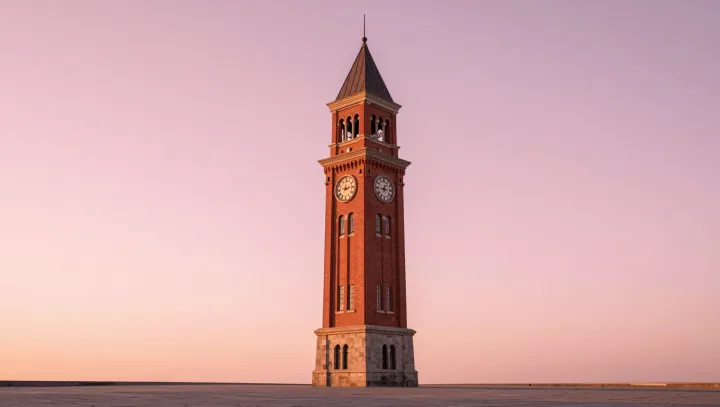
The dial, pale above the roofs, made a radical bargain: time would leave the chamber and enter the street. Height plainly mattered. Set above smoke, market awnings, and narrow lanes, the face held a long line of sight, translating the regulated beat of an escapement into public knowledge.
Visibility was only half. Towns needed a shared standard, not a private instrument whose reading could be ignored, and a raised clock turned a local mechanism into a civic reference. That changed commerce. Market openings, work calls, and legal deadlines could gather around one signal, while officials could display their control of schedules without entering every workshop. The street became the dial. No household needed to inspect the works for the system to shape conduct, which was precisely the political value of public time. The gain was social before it was technical: coordination rather than personal precision justified the public expense.
Mechanical necessity strengthened the case. Weight-driven clocks drew power from descending masses, so a tower gave the train more vertical run and reduced winding intervals; bells, mounted high, also carried farther through dense streets. Sound did its work. Existing bell towers offered a ready-made platform, which made elevation cheaper than building a separate civic device at street level. That economy mattered. The tower therefore joined optics, acoustics, and governance in one expensive machine. Its face broadcast time; its height made that promise hard to miss.