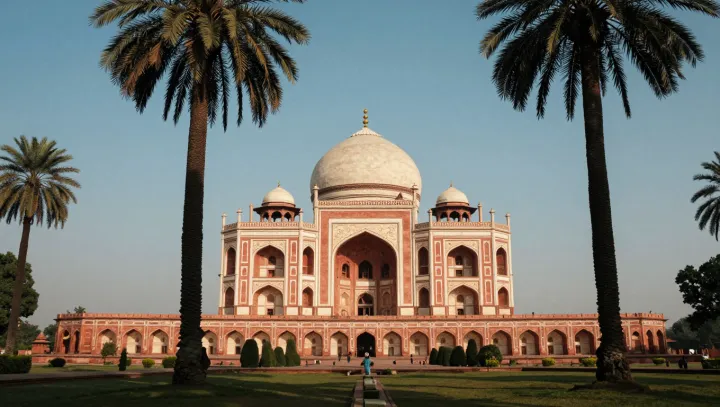
Palms frame an argument. Beneath them, the tomb refuses the false choice between imported taste and local craft: its axial garden channels Persian ideas of ordered paradise, while its red sandstone mass and white-marble skin answer the quarries, labor systems, and ceremonial expectations of northern India. Power needed both. More than a burial chamber, the monument made dynastic rule legible through proportion, water, shade, and a controlled approach to the central grave.
This was not collage. Persian court culture supplied the four-part garden plan, strict bilateral symmetry, and an elevated tomb form, yet Indian masons gave those ideas their physical grammar through load-bearing masonry, carved screens, red stone, and marble inlay. Stone carried politics. Red sandstone signaled command over local resources, while white marble concentrated prestige at domes, borders, and sacred-looking surfaces; contrast made hierarchy visible even before a visitor understood the plan. Water made doctrine tangible. Narrow channels and pooled basins turned axial planning into a sensory order, cooling the route, multiplying reflections, and making the grave appear to command a measured world. Materials served heat. Sandstone's thermal mass slowed temperature swings, while pale marble reflected more sunlight than darker stone; neither property explains the design alone, but each made costly symbolism more usable in a hot setting. It was calculated. A ruler could honor inherited Persian ideals without pretending that India was merely a backdrop, and the tomb's calm geometry still holds that tension beneath the palms.