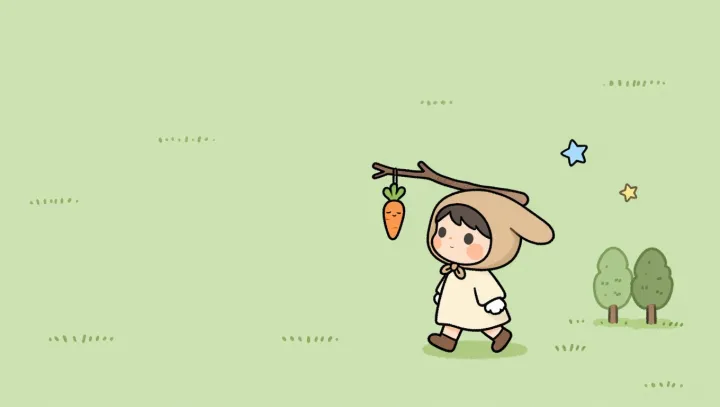
The carrot is a brilliant piece of rabbit fiction. Beside the costumed character, a tiny carrot dangling from a branch turns a woodland scene into a recognizable joke: the animal and its supposed favorite food, reunited. The picture is charming. Its nutritional message is rather less reliable.
Cartoons made the pairing stick. Bugs Bunny helped make the carrot a visual shorthand for rabbit mischief, chewing one with an easy confidence that needed no explanation. Its bright color and distinctive shape also make it a useful prop: an audience can identify it at a glance, even when the rabbit is a person in costume. Repetition did the rest. A familiar image became a kind of common knowledge, although recognition is not evidence of a healthy diet.
Real rabbits are built for rougher fare. Grass hay should form the bulk of an adult pet rabbit's diet, supplying fiber that supports hindgut fermentation, the microbial breakdown of plant material. Chewing fibrous food also helps wear down teeth that grow continuously. Another process, cecotrophy, allows rabbits to recover nutrients by eating soft droppings produced in the cecum. Carrots contain more sugar than leafy greens and are best offered in small amounts as an occasional treat, alongside fresh water and suitable greens. The distinction matters. In the woodland picture, the carrot hangs ready for its cue; the hay that sustains its companion stays outside the frame.