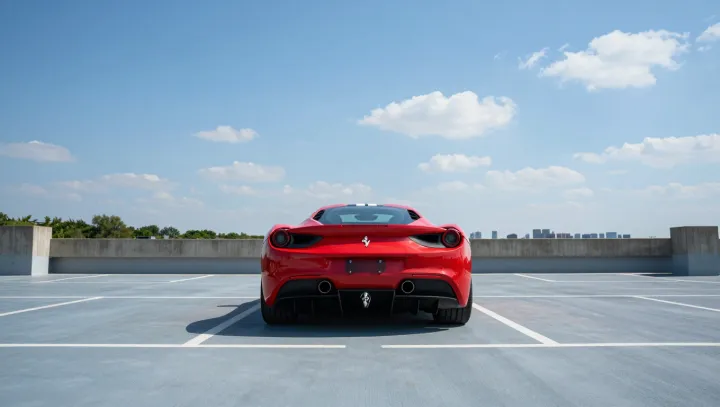
The diffuser does not create downforce simply by slowing air. That sounds backward. Beneath a red Ferrari, its expanding rear channel helps manage a pressure change that begins farther forward, where air speeds through the confined space between the floor and the road.
The distinction is where the pressure rises. As airflow enters the expanding diffuser, it generally slows and undergoes pressure recovery: static pressure increases toward the surrounding level. Yet that recovery can help the underfloor sustain fast airflow and low pressure upstream. With higher pressure above the body than below much of the floor, the resulting pressure difference pushes the car downward. Pressure still acts on the diffuser itself, so its contribution cannot be judged by looking at one patch of airflow in isolation. The whole floor matters.
The shape is a compromise, not a magic ramp. If the diffuser expands too aggressively, the boundary layer can separate from its surface, disrupting pressure recovery and reducing its effectiveness. Ride height, the shape of the underbody and the motion of the surrounding air all affect the result; a diffuser that works well under one condition may behave differently under another. Aerodynamic drag also matters, because more grip is useful only when weighed against the resistance and other demands of the car. Under the red bodywork, the contest is between air that stays attached and air that refuses to follow.