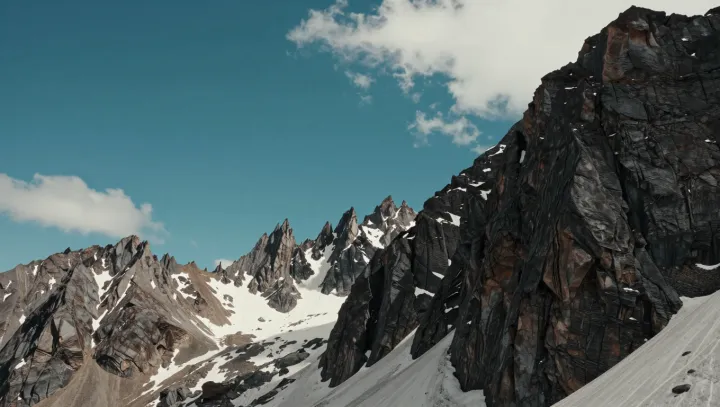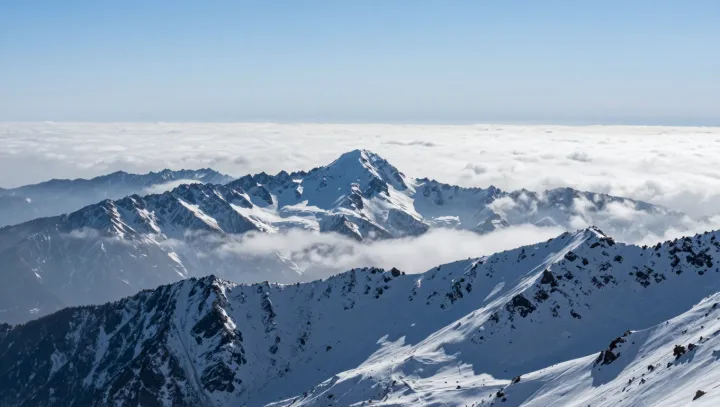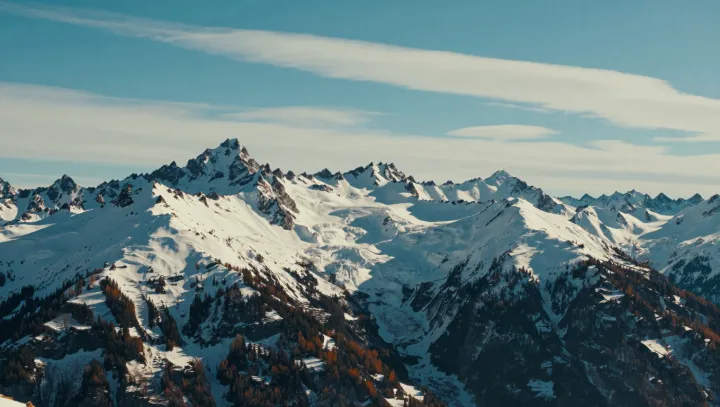
Freezing air cannot guarantee a mountain's water supply. Snow can disappear without melting, passing directly from solid ice into water vapor through sublimation. Above forested slopes, where rock breaks through snowfields and wind scours exposed ridges, the process can quietly reduce the water stored for streams below.
Exposure makes the difference. Sublimation draws energy from sunlight and surrounding air, while dry air and wind carry vapor away from the snow surface, allowing more ice to escape. Low humidity matters. So does turbulence. The effect varies across a mountain: sheltered snow may persist while windblown snow, broken into small particles with more surface area, loses mass rapidly. Ice on glaciers can also sublimate, though the balance between snowfall, melting and other losses determines whether a glacier grows or shrinks.
A white summit is therefore an imperfect promise. Snow water equivalent, the amount of water held in a snowpack, matters more to water managers than its appearance; some of that stored water can return to the atmosphere rather than reach a river. Sublimation can reduce runoff, especially in cold, dry, windy places, but its share varies with local conditions. Forecasts that account only for snowfall and temperature can miss part of the loss, complicating decisions about reservoirs, irrigation and drinking water. On a ridge that never thaws, a stream can disappear into the air.