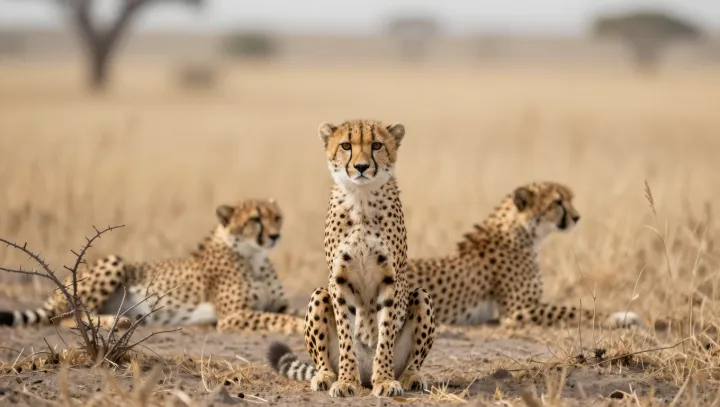
For male cheetahs, brotherhood can be a route to power; for their sisters, going it alone often pays better. A young cheetah sitting among companions in dry grass offers no guarantee of what comes next. Its spotted coat and dark facial stripes are shared by both sexes, but their adult lives often diverge.
A coalition is less a hunting club than a claim on access. Brothers who stay together after leaving their mother can defend territory against rival males, holding ground through which females may pass. Kin selection helps explain why cooperation among relatives can spread: helping a brother reproduce can also favor genes they share. The arrangement is not exclusive to siblings, however, and some males remain solitary. Alliances can last for years, sometimes for life, but their duration varies.
For females, company comes with a different bill. A mother must find enough prey for herself and her cubs, and sharing food with other adults could make that task harder. Females generally use large home ranges and hunt alone, apart from the months when dependent young accompany them; prey distribution and the demands of raising cubs help shape that pattern. These are tendencies, not rules. A female may be seen with other cheetahs, and males in coalitions do not always hunt together. In the grass, the same spotted forms can conceal very different bargains.