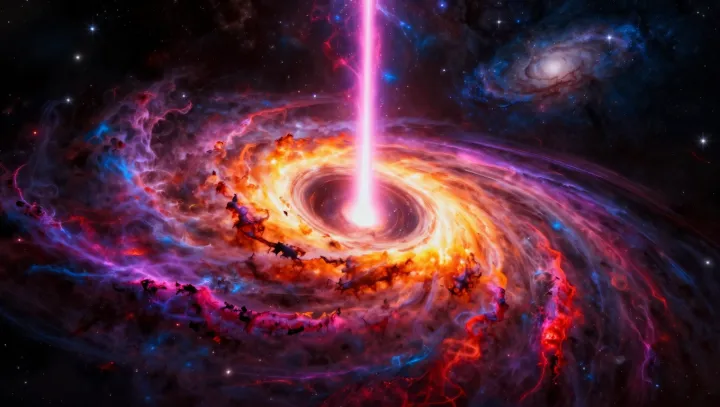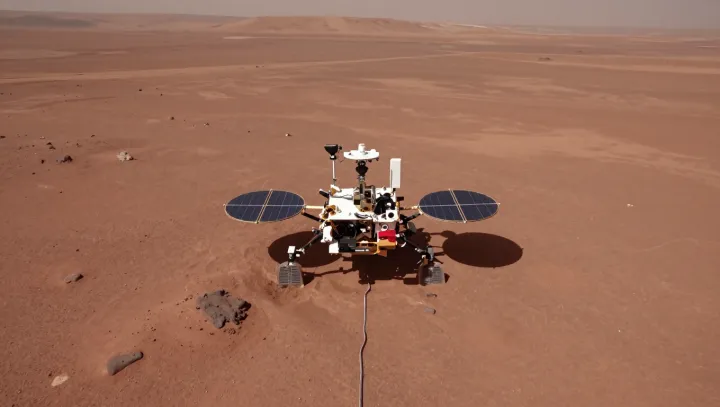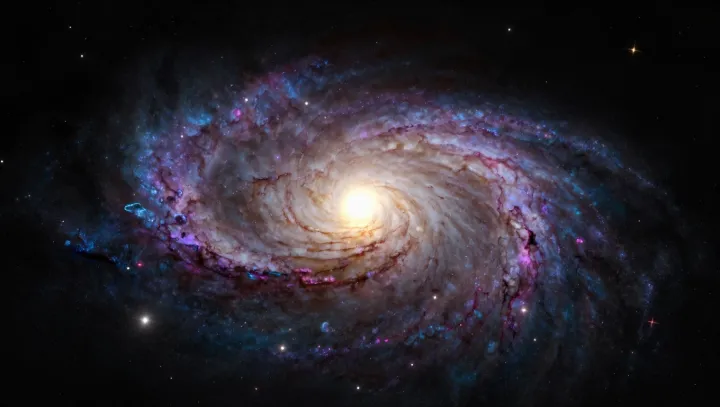
A distant spiral galaxy, not rusty Mars, now carries the bolder promise for human survival, some astronomers argue. Underneath the rhetoric about Mars colonies lies an awkward comparison: one cold, thin‑aired rock versus billions of main‑sequence stars, many with broad circumstellar habitable zones and long nuclear‑fusion lifetimes.
The harsher claim is that Mars is a short hedge, not a real plan. Its weak magnetosphere, low gravity, and fragile CO2 atmosphere leave any settlement chained to life‑support engineering and radiation shielding, all vulnerable to single‑point failure. By contrast, a whole spiral disk spreads risk across enormous phase space: different metallicities, orbital architectures, and stable planetary systems, each a separate experiment in habitability governed by stellar evolution and planetary geodynamics rather than one accident‑prone outpost.
More provocative still is the argument from existential risk. A nearby supervolcano, impact, or technological catastrophe could erase both Earth and Mars in one correlated event, because they share the same gravitational well and much of the same impactor population. A galaxy‑scale strategy, built on interstellar propulsion and astrometry precise enough to target long‑lived G‑type stars, intentionally decorrelates those risks. Spread a species across thousands of independent biospheres, and extinction becomes not just unlikely, but statistically stubborn.