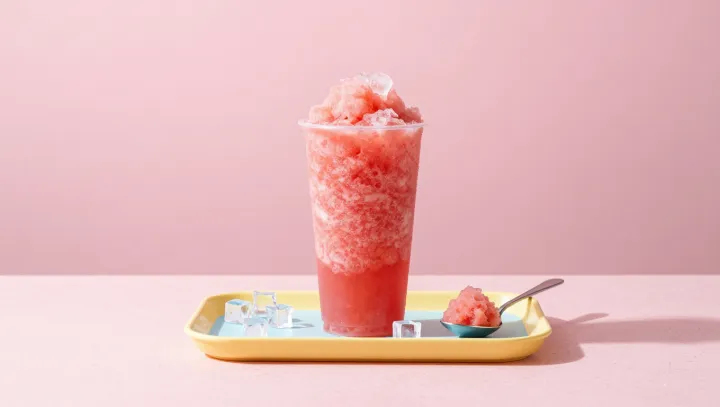
Cold is not a number on a thermometer; it is a sensation your tongue can be pushed into exaggerating. Turn juice into a slush of microscopic ice and the same formula suddenly feels like a frozen punch in the mouth. That shift starts with geometry. Smaller crystals mean enormous surface area, so heat leaves the tongue faster, driving a steeper temperature gradient right where thermoreceptors sit.
Those thermoreceptors, based on transient receptor potential channels such as TRPM8, fire more intensely when the local drop is rapid and focused, not gently spread through a pool of liquid. Short sip. Violent signal. At the same time, partial freezing concentrates sugars and organic acids in the remaining liquid phase, while the churning motion pulls volatile esters and terpenes into the air above the cup.
Flavor, then, is not added; it is reallocated and amplified by physics. Faster convective heat transfer over crystal edges drives the chill, while increased headspace aroma boosts what olfactory neurons report as fruit intensity. A glass of still juice whispers its chemistry. The same juice, shaved and aerated, broadcasts it at close range.