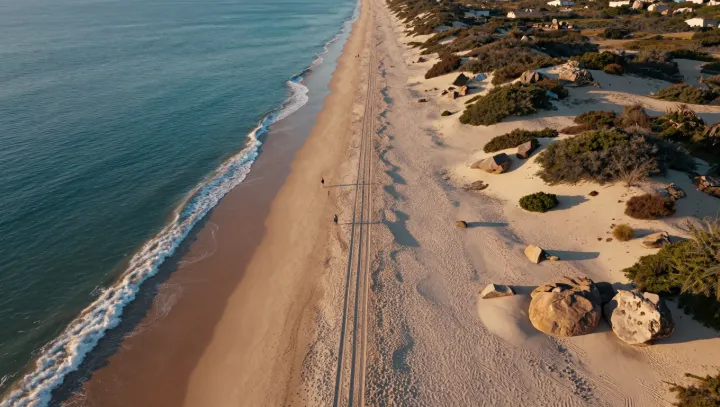
A beach does not sit still; it behaves like a slow, precise machine driven by nothing but gravity and waves. Each incoming breaker loads this machine with energy, and the grains answer, sliding, bouncing and locking into new patterns that quietly move rock and water alike.
The bold claim is this: cliffs are not carved mainly by storms, but by the patient arithmetic of grains in motion. When waves crash, they suspend sand in turbulent flow, a process described by fluid dynamics and shear stress. Those grains become abrasive tools. They scour the base of rock faces through hydraulic action and abrasion, undercutting them until blocks fall, giving the illusion of sudden failure when the real work was incremental and granular.
Equally counterintuitive is how sand can redirect the very waves that push it. As grains pile into offshore sandbars, refraction laws take over. The altered seabed changes wave celerity and angle, bending crests so they focus or disperse energy along the shore. In effect, the beach rewires its own forcing, turning random swell into organized patterns that either shield sections of coast or expose them to attack.
Most transformative of all is the sideways shuffle known as longshore drift. Oblique waves create a sawtooth path for each grain: up the beach, down again, always a little along. Millions of such vectors, integrated over time, build spits, choke inlets and starve distant stretches of shore. Behind the apparent stillness, granular mechanics and wave interference run a continuous experiment, redrawing the map grain by grain.