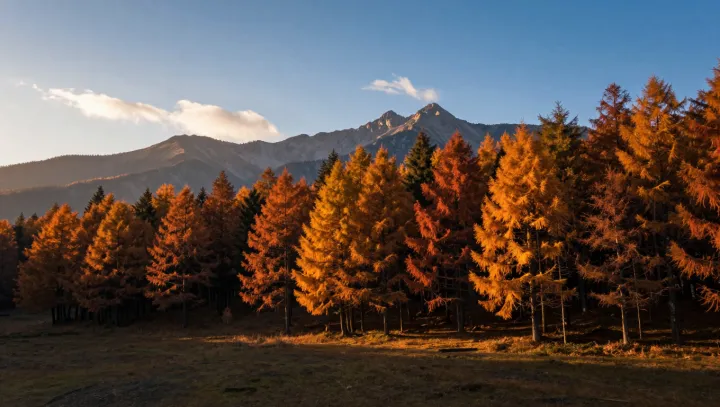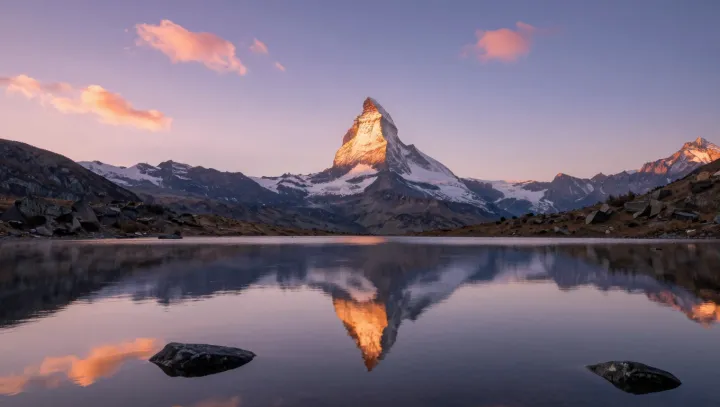
That fierce violet edge above a ridge is not an illusion; high mountains really edit the sunset. Over peaks, the air column is shorter, the pressure lower, the humidity reduced, so the usual veil of aerosols and water droplets is thinned. With fewer particles to cause Mie scattering, less white glare washes over the spectrum, and the long red and near‑violet wavelengths arrive less diluted to the eye.
Counterintuitively, thin air does not mute color; it acts like a high‑quality filter that strips noise from a signal. Rayleigh scattering still redirects shorter blue wavelengths out of the direct path, but because the starting air is clearer, that selective scattering becomes more obvious, so the remaining beam skews even more toward red and magenta. Cold temperatures help by shrinking water vapor content and suppressing larger droplets that would otherwise flatten contrast and smear those subtle purples into a dull gray wash.
Most striking of all is geometry; at altitude, the observer sits closer to the upper atmosphere, so the Sun’s rays skim a long oblique track through relatively clean air before meeting rock and snow. That extended optical path exaggerates wavelength separation, deepening pink bands and isolating violet fringes above shadowed peaks. What looks like drama is, in quiet detail, the mountain simply removing clutter between your retina and the setting star.