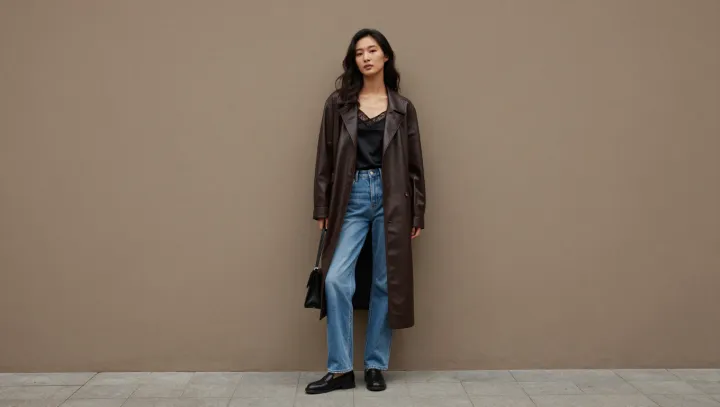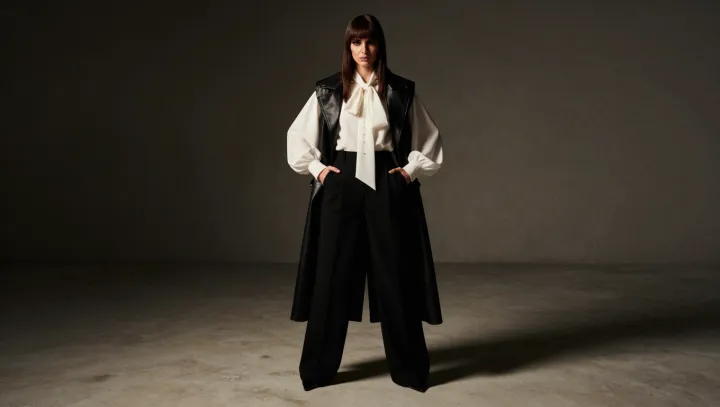
The bow blouse makes black tailoring less obedient. Against wide-leg trousers and a leather layer, its generous white folds interrupt the clean severity of the outfit, offering softness without surrendering presence. The contrast is deliberate. Here, volume does not conceal the structure around it; it gives the eye somewhere else to rest.
The bow carries more history than its prettiness suggests. Variations of the tied-neck blouse became familiar in professional dress as women entered offices where masculine suits set the terms of authority. The tie offered a loose visual echo of menswear, while the blouse retained details associated with feminine dress. It was an accommodation, not a simple act of rebellion. Yet that ambiguity gave the garment room to work: it could signal competence within a convention without reproducing the convention exactly.
This outfit makes that tension visible rather than resolving it. The wide-leg silhouette gives the trousers weight and movement, while the leather layer adds a firmer surface; the blouse, with its fluid drape and oversized bow, refuses to be merely a decorative insert. Proportion does the arguing. The black pieces frame the white fabric, but they do not quite contain it, and the eye moves between the disciplined outline and the folds that spill across it. Authority remains in the room. So does the possibility that it might dress differently.