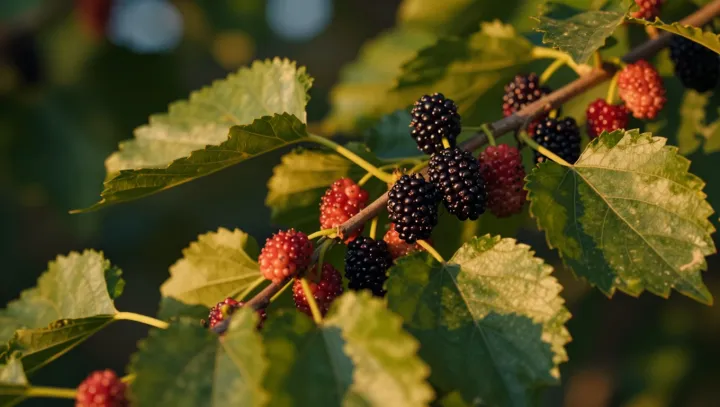
A mulberry is not a blackberry with a different name. Its resemblance conceals a different piece of botanical architecture: a blackberry develops from one flower, while a mulberry takes shape from a cluster of flowers whose parts mature together. The distinction is more than a curiosity; it explains why the two fruits are assembled differently.
The mulberry is a collective effort. Botanists call it a multiple fruit, formed when an inflorescence, or flower cluster, develops into a single fruiting body. Each flower contributes a small fruit, surrounded by fleshy floral tissue, and the crowded units grow together around a central axis. A blackberry, by contrast, is an aggregate fruit: its separate drupelets develop from the many ovaries of one flower. The family resemblance is real. The construction plans are not.
The better argument for eating mulberries, though, is less technical. They supply dietary fiber, which supports digestion, and vitamin C, which helps the body maintain connective tissue and absorb iron from plant foods. Nutrient levels vary with the fruit and its preparation, and preserves can contain substantial added sugar. Fresh mulberries need little attention beyond a gentle rinse; their soft flesh also makes them useful in jams, sauces and baked goods. They bruise easily, so handle them gently and refrigerate them promptly. On a plate, the small clusters look almost like a single thought, held together just long enough to be eaten.