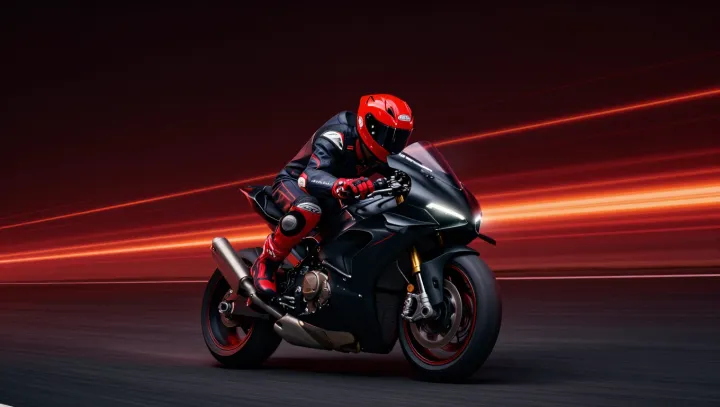
The motorcycle need not lean as far as its rider. In a steady turn, a body shifted inward moves the combined center of mass toward the inside of the curve, allowing the black sport bike itself to sit more upright while the pair maintain the lean their speed and path demand. The distinction matters.
The governing geometry is less intuitive than the image suggests. On level pavement, the line from the tire contact patch to the combined center of mass must tilt inward to balance gravity against the forces associated with turning. For a steady turn, that required angle depends principally on speed and turn radius: greater speed or a tighter radius demands more combined lean. Shift the rider inward, and the motorcycle can contribute less of that angle. The total lean does not disappear.
An upright machine is not a guarantee of grip. Reducing the motorcycle's own lean can increase clearance between its hard parts and the road, but the tires still need enough friction to supply the lateral force required by the turn. Surface conditions, tire characteristics and abrupt changes in speed or direction all affect the available margin. A photograph captures only an instant, not the balance of forces that made it possible. Against the dark machine, the rider's displaced body makes an invisible balance briefly visible.